








-

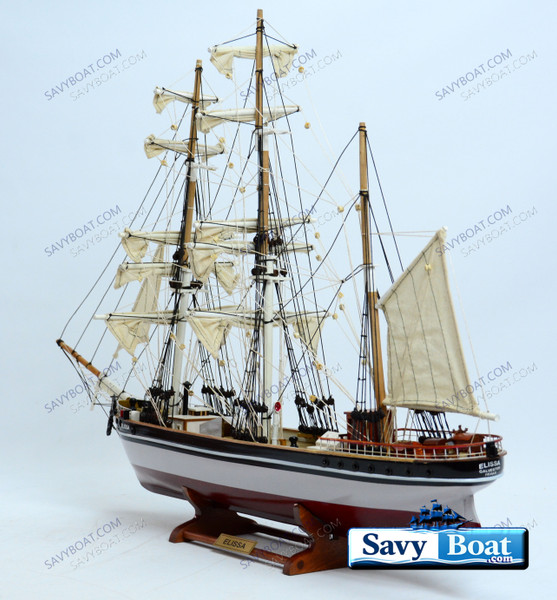
ELISSA TALL SHIP
SAVY DIRECT PRICE $739.96MSRP: $789.99ELISSA TALL SHIP FULLY BUILT AND READY TO DISPLAY QUALITY SHIP MODEL Dimension approx.: 31″ (long) x 9″ (wide) x 19″ (high) The model is already built. THIS IS NOT A MODEL SHIP... -
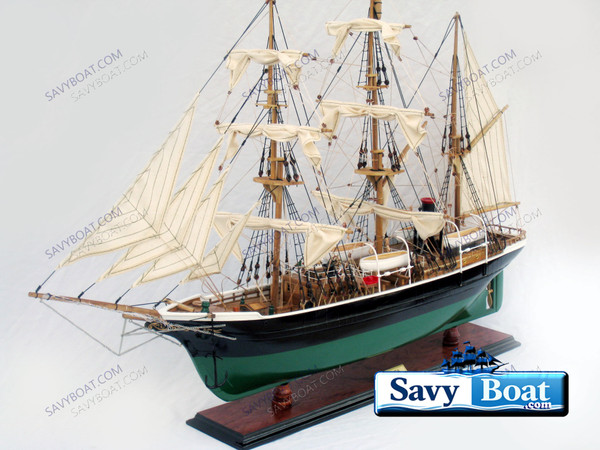
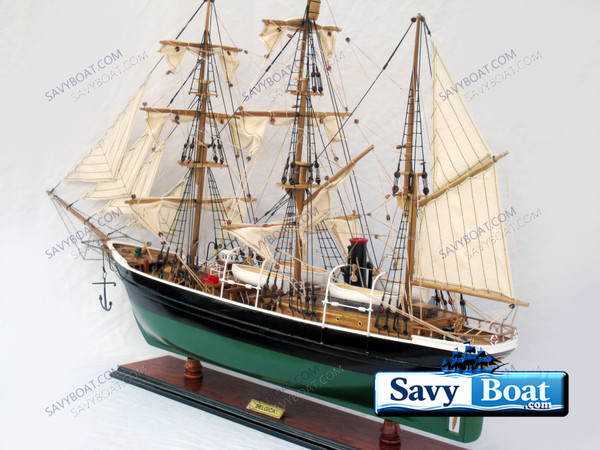
BELGICA TALL SHIP
SAVY DIRECT PRICE $799.96MSRP: $849.99BELGICA TALL SHIP FULLY BUILT AND READY TO DISPLAY, QUALITY SHIP MODEL Dimension approx.: 28.74L x 5.51W x 25.59H (inches) The model is already built. THIS IS NOT A MODEL SHIP KIT When... -


HMS AGAMEMNON TALL SHIP
SAVY DIRECT PRICE $989.96MSRP: $1,049.99HMS AGAMEMNON TALL SHIP FULLY BUILT AND READY TO DISPLAY MUSEUM QUALITY SHIP MODEL Dimension approx.: 35L x 11W x 31H (inch) The model is already built. THIS IS NOT A MODEL...
Description

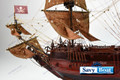
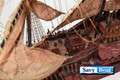
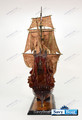
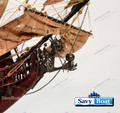
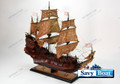
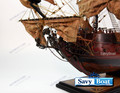
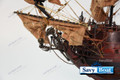
QUEEN ANNE'S REVENGE TALL SHIP
FULLY BUILT AND READY TO DISPLAY, MUSEUM QUALITY SHIP MODEL
- Dimension Approx.: 38″ (long) x 15″ (wide) x 34″ (high)
- The model is already built, NOT a model ship kit
Long before she became the most infamous pirate ship of the early 18th century, Queen Anne’s Revenge began life under a very different name and purpose. Built around 1710 in France, the vessel was launched as La Concorde, a 200‑ton frigate serving the interests of French merchants and privateers. She sailed the Atlantic in multiple roles — as a naval auxiliary during Queen Anne’s War, as a merchantman, and most grimly as a slave ship, transporting more than a thousand enslaved Africans across the Middle Passage. Her early career reflects the harsh economic engines of the era long before piracy ever touched her decks.
In November 1717, everything changed. Near Martinique, La Concorde crossed paths with the pirate captain Edward Teach, better known as Blackbeard. His crew captured the vessel with little resistance — the French sailors were weakened by disease — and Blackbeard immediately recognized her potential. He mounted heavy cannon, expanded her crew to more than 300 men, and rechristened her Queen Anne’s Revenge, a name that hinted at both political nostalgia and personal menace.
For the next seven months, the ship became the terror of the American coast. Under Blackbeard’s command, Queen Anne’s Revenge blockaded Charleston, seized merchantmen from the Caribbean to Virginia, and carved out a reputation that would echo through centuries of pirate lore. Her size, firepower, and speed made her one of the most formidable pirate flagships of the Golden Age.
But her reign was brief. In May 1718, while navigating the shoals near Beaufort Inlet, North Carolina, Blackbeard deliberately or accidentally ran the ship aground. The crew and supplies were transferred to smaller vessels, and Queen Anne’s Revenge was abandoned to the sand and surf. Within months, Blackbeard himself would be killed in battle, and the ship that had carried his legend vanished beneath the water.
For nearly 300 years, the wreck lay hidden. Then, in 1996, a private research team discovered the remains. Archaeologists soon confirmed the identity of the site, and in 2004 it was added to the U.S. National Register of Historic Places. Excavations have since recovered cannons, tools, weapons, medical equipment, and personal artifacts — a rare, tangible window into the world of early‑18th‑century piracy and the brutal maritime economy that shaped it.
Today, Queen Anne’s Revenge stands as a powerful symbol of two intertwined histories: the romanticized mythology of pirates and the stark realities of the transatlantic slave trade. Her story is preserved through ongoing conservation efforts by the North Carolina Department of Natural and Cultural Resources, ensuring that the ship’s complex legacy — both legendary and deeply human — is not forgotten.