









-


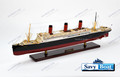
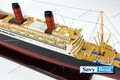
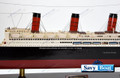
SS VATERLAND passenger STEAMship 40" fully built wood model with stand
SAVY DIRECT PRICE $1,199.96MSRP: $1,249.99SS Vaterland Ocean Liner Hamburg-America Line’s Dimension approx.: 38″ L x 4.5″ W x 12″ H Approx Scale 1/300 This museum quality model is already built, ready to display Handcrafted scratch... -
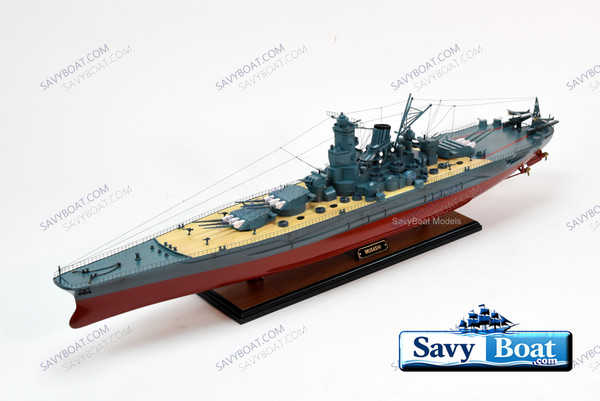

MUSASHI JAPANESE battleship 39" fully built wood model with stand
SAVY DIRECT PRICE $899.96MSRP: $999.99JAPENESE BATTLESHIP MUSASHI FULLY BUILT AND READY TO DISPLAY MUSEUM QUALITY SHIP MODEL Dimension approx.: 39.5″ (long) x 6.5″ (wide) x 9.5″ (high). APPROX SCALE 1/350 This beautiful... -
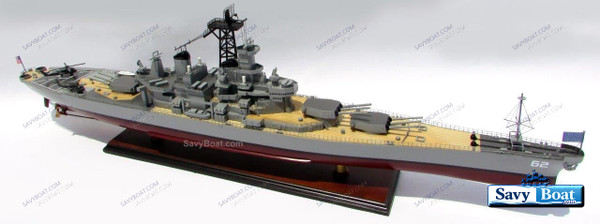

USS NEW JERSEY battleship 39" fully built wood model with stand
SAVY DIRECT PRICE $899.96MSRP: $949.99USS NEW JERSEY BATTLESHIP FULLY BUILT AND READY TO DISPLAY MUSEUM QUALITY SHIP MODEL Dimension approx.: 40″ L x 5″ W x 12″ H This beautiful model is already built, NOT a kit. USS New Jersey...
Description

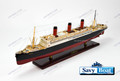
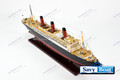
RMS BERENGARIA STEAMSHIP
FULLY BUILT AND READY TO DISPLAY, QUALITY SHIP MODEL
- Dimension Approx.: 39″ (long) x 4.5″ (wide) x 13″ (high).
- The model is already built, NOT a model ship kit
The ship that would one day become RMS Berengaria began life as SS Imperator, launched on 23 May 1912 at the Vulcan Werft shipyard in Hamburg. Built for the Hamburg America Line, she was conceived as Germany’s answer to the great British liners — a vessel so large and imposing that she briefly held the title of largest passenger ship in the world, surpassing even the Olympic. Designed in the shadow of the Titanic disaster, she incorporated improved safety features and a powerful turbine installation that gave her a top speed of 24 knots. Her maiden voyage from Cuxhaven to New York in June 1913 marked the arrival of a new contender in the transatlantic race.
When the First World War began, Imperator’s career came to an abrupt halt. Laid up in Hamburg for more than four years, she never sailed again under the German flag. In May 1919, she was seized by the United States as a war prize and briefly served as a U.S. Navy troop transport, repatriating thousands of American soldiers. Decommissioned later that year, she was transferred to British control as compensation for the loss of Lusitania and assigned to the Cunard Line.
Between late 1919 and early 1920, the ship underwent extensive repairs in Liverpool, including a major conversion from coal to oil firing. On 21 February 1920, she made her first Cunard voyage, and in February 1921, she received her new name: RMS Berengaria, honoring Queen Berengaria of Navarre. For more than a decade — from 1920 to 1934 — she served as Cunard’s flagship, sailing the Southampton–Cherbourg–New York route alongside Mauretania and Aquitania.
As Berengaria, she embodied the luxury of the interwar years. With accommodations for more than 4,200 passengers across four classes and a crew of 1,180, she was a floating city. Her four direct‑drive turbines produced 60,000 shaft horsepower, giving her the speed and reliability demanded by transatlantic travelers. She underwent major overhauls in 1922 and 1933, and even set a record passage in 1935, proving that the old German giant still had life in her.
But by the late 1930s, the world of ocean travel was changing. Cunard’s new superliners — Queen Mary and Queen Elizabeth — rendered the aging Berengaria obsolete. In March 1938, she suffered a serious fire in New York Harbor, accelerating her decline. On 7 November 1938, she was sold for scrap. Wartime congestion delayed her final dismantling, and it was not until 1946 that she was fully broken up in the Firth of Forth.
From her origins as Imperator to her long service as Berengaria, the ship lived multiple lives: German showpiece, American troopship, Cunard flagship, and finally a grand old liner overtaken by a new generation. She remains a symbol of early 20th‑century transatlantic travel — a vessel that bridged empires, survived a world war, and carried hundreds of thousands of passengers across the Atlantic in an age when the great liners were the queens of the sea.