









-


AIDAvita CRUISE SHIP
SAVY DIRECT PRICE $799.96MSRP: $899.99AIDAVITA (BLUE DREAM MELODY) PASSENGER SHIP FULLY BUILT AND READY TO DISPLAY, QUALITY SHIP MODEL Dimension approx.: 33″ L x 7″ W x 16″ H The model is already built. THIS IS NOT A... -

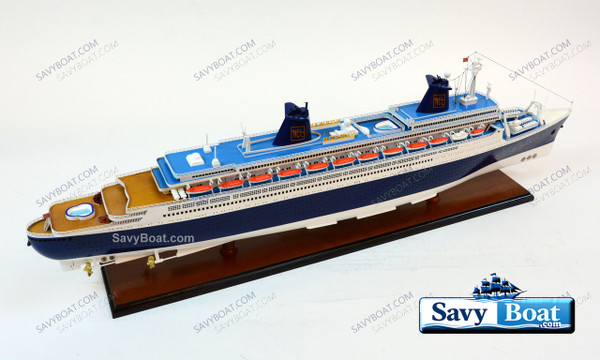
SS NORWAY CRUISE SHIP
SAVY DIRECT PRICE $839.96MSRP: $899.99SS NORWAY OCEAN LINER FULLY BUILT AND READY TO DISPLAY, QUALITY SHIP MODEL Dimension approx.: 40″ (long) x 5″ (wide) x 10″ (high) The model is already built. THIS IS NOT A MODEL... -


MV DEUTSCHLAND CRUISE SHIP
SAVY DIRECT PRICE $999.96MSRP: $1,099.99MV DEUTSCHLAND CRUISE SHIP FULLY BUILT AND READY TO DISPLAY, HIGH QUALITY SHIP MODEL Dimension Approx.: 34.25L x 4.75W x 12.5H The model is already built, NOT a model ship kit Sails in unf
Description

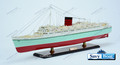
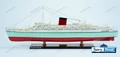
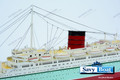
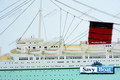
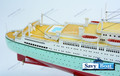
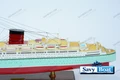
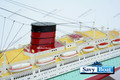
RMS CARONIA CRUISE SHIP
FULLY BUILT AND READY TO DISPLAY BOAT MODEL
- Dimension approx.: 35"L x 5"W x 13"H
- The model is already built. THIS IS NOT A MODEL SHIP KIT
When RMS Caronia slid down the ways at John Brown & Company in Clydebank on 30 October 1947, christened by HRH Princess Elizabeth, she represented a new direction for Cunard in the postwar era. At 34,183 GRT, Caronia was large, graceful, and instantly recognizable thanks to her distinctive light‑green hull livery — a look that earned her the affectionate nickname “The Green Goddess.” She was conceived not merely as a transatlantic liner, but as a vessel that could bridge two worlds: the traditional Southampton–New York run and the emerging market for luxury cruising.
Completed in December 1948, Caronia departed on her maiden voyage on 4 January 1949, sailing from Southampton to New York via Cherbourg. Although originally intended to complement the RMS Mauretania on the Atlantic, Cunard soon realized her potential as a dual‑purpose ship. Summers were spent on transatlantic crossings; winters saw her sailing to the West Indies, South America, and other warm‑weather destinations. Her interiors — refined, art‑deco influenced, and deeply comfortable — created a “club‑like” atmosphere where passengers often had dedicated stewards and returned year after year.
Caronia’s cruising career blossomed in the 1950s. In 1951, she embarked on her first world cruise, calling at more than thirty ports. Between 1952 and 1959, cruising increasingly dominated her schedule, with Atlantic crossings limited to late summer. She became a favorite of wealthy travelers, celebrities, and long‑term residents who lived aboard for months or even years. Her reputation for service, stability, and elegance made her one of the most beloved ships of the decade.
Her long career was not without incident. Caronia grounded in the Suez Canal in 1952, again at Messina in 1956, and suffered bow damage during a 1958 world cruise in Japan. Yet she remained a symbol of refined travel, a ship whose green hull and graceful lines were instantly recognizable in ports around the world.
By the late 1960s, changing economics and rising competition made her operation increasingly difficult. In 1968, Cunard sold Caronia to Universal Cruise Line, renaming her Columbia, and later Caribia. Her final years were troubled: mechanical issues, financial instability, and a series of lay‑ups marked her decline. In 1974, while under tow to Taiwan for scrapping, a storm in Apra Harbor, Guam snapped her tow lines. She crashed repeatedly against the breakwater, was declared a total loss, and was eventually dismantled where she lay.
Though her end was tragic, RMS Caronia remains one of the most iconic cruise ships of the postwar era — a vessel that blended Atlantic practicality with pioneering cruise‑ship luxury. Her nickname, “The Green Goddess,” still evokes an age of elegance, long voyages, and the early promise of global leisure cruising. She stands today as a symbol of Cunard’s innovation and the golden era of mid‑century ocean travel.