









-
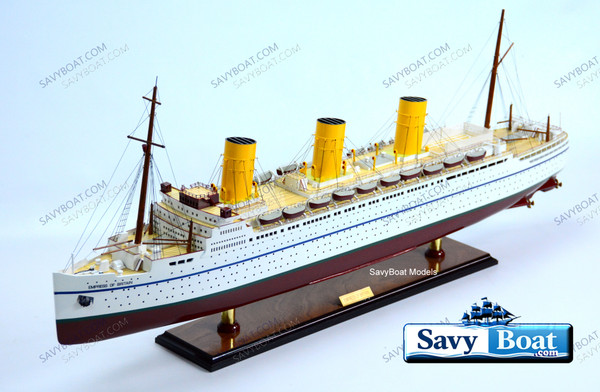

RMS EMPRESS OF BRITAIN
SAVY DIRECT PRICE $899.96MSRP: $999.99EMPRESS OF BRITAIN FULLY BUILT AND READY TO DISPLAY MUSEUM QUALITY SHIP MODEL Dimension approx.: 33″ L x 5.5″W x 13″ H Scale 1:250 The model is already built, NOT a model ship... -


RMS EMPRESS of FRANCE
SAVY DIRECT PRICE $1,199.96MSRP: $1,349.99RMS EMPRESS OF FRANCE, CANADIAN PACIFIC LINE (formerly Duchess of Bedford) FULLY BUILT AND READY TO DISPLAY MUSEUM QUALITY SHIP MODEL Dimension approx.: 36″ L x 5.5″W -


RMS EMPRESS OF IRELAND
SAVY DIRECT PRICE $999.96MSRP: $1,099.99RMS EMPRESS OF IRELAND, CANADIAN PACIFIC LINE FULLY BUILT AND READY TO DISPLAY MUSEUM QUALITY SHIP MODEL Dimension approx.: 36″ L x 5.5″W x 13″ H Scale 1:250 The model is already built,...
Description

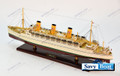
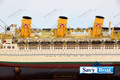
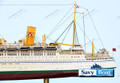
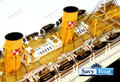
RMS EMPRESS OF SCOTLAND, CANADIAN PACIFIC LINE
FULLY BUILT AND READY TO DISPLAY MUSEUM QUALITY SHIP MODEL
- Dimension approx.: 36″ L x 5.5″W x 13″ H Scale 1:200
- The model is already built, NOT a model ship kit
- Handcrafted from scratch using finest woods & metal fittings
- This beautiful model is already built, NOT a kit.
- Handcrafted from finest wood and metal fittings.
- Open die cut side hull windows, NOT painted like those built by most other companies.
- The model is 100% hand built by artisans from scratch
- Hand-painted to match the actual ship.
After the war, the ship that had once crossed the Pacific at record speed found herself facing a very different ocean. Renamed Empress of Scotland, she returned to her builders at Fairfield between 1948 and 1950, where the scars of wartime service were stripped away and her interiors reshaped for the booming trans‑Atlantic trade. Gone were the four rigid social classes of the prewar era; in their place came a simpler, more democratic arrangement—first class and tourist—designed for a world eager to travel again. Her cabins were modernized, her structure strengthened for the harsher Atlantic weather, and her public rooms refreshed with the optimism of the postwar years.
In this new form she carried thousands across the ocean, from emigrants seeking new beginnings to tourists rediscovering the world. Her most celebrated voyage came in 1951, when she carried Princess Elizabeth and Prince Philip home from their Canadian tour, a quiet but symbolic moment in the early life of a future queen. Yet even as she sailed proudly between Canada and Britain, the age of the great liners was beginning to shift. Air travel was rising, and newer, faster ships were entering service. By 1957, after her final crossing, the Empress of Scotland was laid up in Belfast—still dignified, but clearly nearing the end of her Canadian Pacific chapter.
Her story might have ended there, but in 1958 she was given one last, dramatic transformation. Purchased by the Hamburg Atlantic Line, she was rebuilt so extensively that she emerged almost unrecognizable. Her aft funnel vanished, her remaining funnels and superstructure were reshaped into clean, modern lines, and her accommodations were expanded to serve a booming postwar German market. Reborn as the TS Hanseatic, she became a symbol of West Germany’s renewed presence on the Atlantic, carrying more than 1,300 passengers between Hamburg and New York in bright, contemporary comfort.
For eight years she thrived, a familiar sight gliding into Cuxhaven or easing past Manhattan’s skyline. But in September 1966, fire struck deep in her engine room while she lay in New York. Flames tore upward through five decks, gutting the heart of the ship that had once carried royalty, refugees, and generations of travelers. Towed back to Hamburg for inspection, she was declared beyond economic repair. And so, after a career that spanned three names, three identities, and nearly four decades of service, the ship that began as the Empress of Japan met her quiet end at the scrapyards—her long wake fading into history.