









-

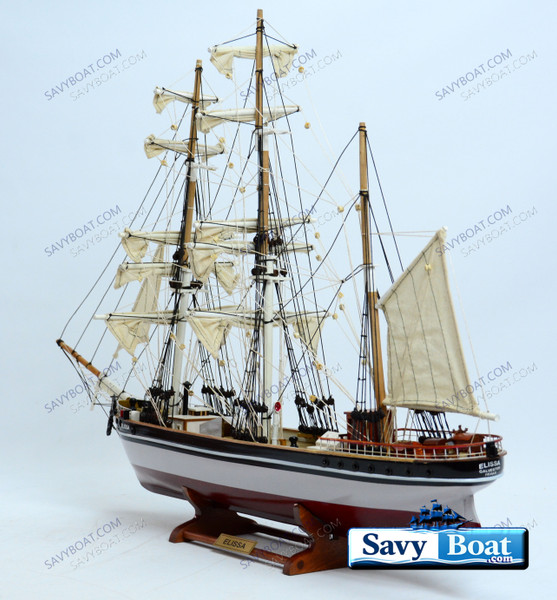
ELISSA TALL SHIP
SAVY DIRECT PRICE $739.96MSRP: $789.99ELISSA TALL SHIP FULLY BUILT AND READY TO DISPLAY QUALITY SHIP MODEL Dimension approx.: 31″ (long) x 9″ (wide) x 19″ (high) The model is already built. THIS IS NOT A MODEL SHIP... -
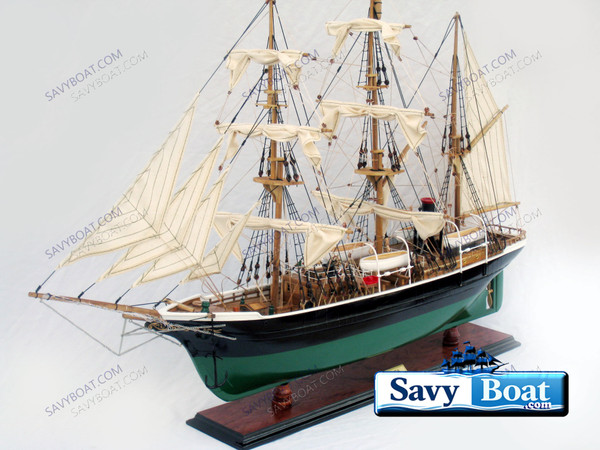
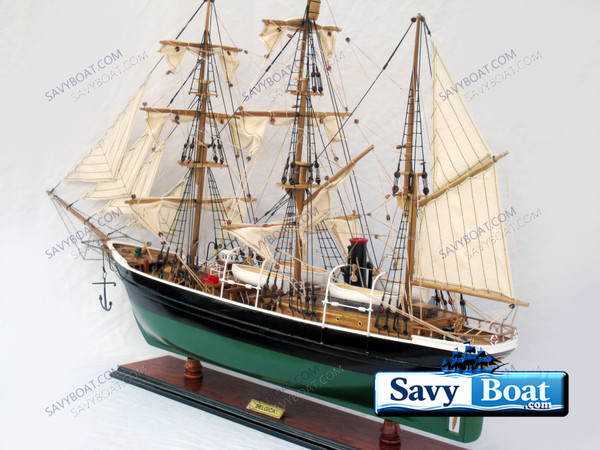
BELGICA TALL SHIP
SAVY DIRECT PRICE $799.96MSRP: $849.99BELGICA TALL SHIP FULLY BUILT AND READY TO DISPLAY, QUALITY SHIP MODEL Dimension approx.: 28.74L x 5.51W x 25.59H (inches) The model is already built. THIS IS NOT A MODEL SHIP KIT When... -


FRAM (FORWARD) TALL SHIP
SAVY DIRECT PRICE $499.96MSRP: $549.99FRAM (FORWARD)TALL SHIP FULLY BUILT AND READY TO DISPLAY HIGH QUALITY SHIP MODEL Dimension approx.: 28 inch L x 8 inch W x 23 inch H The model is already built. THIS IS NOT A...
Description

SIGYN TALL SHIP
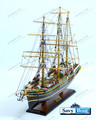
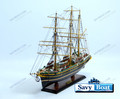
FULLY BUILT AND READY TO DISPLAY BOAT MODEL
- Dimension approx.: 40″ L x 12″ W x 27″ H
- The model is already built. THIS IS NOT A MODEL SHIP KIT
The wooden barque Sigyn was launched in 1887 from the busy shipyards of Gothenburg, Sweden, at a time when thousands of similar sailing vessels still crossed the world’s oceans. She was among the last of her kind: a traditional wooden barque built strong enough for transoceanic trade, yet compact enough to slip into remote harbors where larger steel ships could not go. Her design reflected the final chapter of the age of sail — practical, sturdy, and meant to work hard across long distances.
Sigyn’s maiden voyage carried her from Gothenburg to Southampton, beginning a decade of Atlantic tramp trade. She hauled whatever cargo the market demanded: pine, spruce, mahogany, coal, sugar, even hay. Her routes were wide‑ranging, and in 1897 she made a remarkable journey to Bangkok, a testament to the endurance and versatility of wooden merchant ships in the late 19th century.
By 1900, Sigyn shifted to European waters, trading along the coasts of the North Sea and Baltic. A storm in 1913 forced her to seek shelter near Kristiansand, where she suffered damage that led to a significant transformation. She was rerigged as a barquentine, a configuration better suited to the shorter, more variable winds of northern coastal trade. Yet even in this new role, Sigyn proved her resilience. During World War I, she crossed the Atlantic twelve times between 1915 and 1916, taking advantage of wartime demand for cargo despite the dangers of submarine warfare.
Her ocean‑going career ended in 1917, when she ran aground and her copper shipworm protection was removed. Without that safeguard, long voyages were no longer possible. A decade later, in 1927, she was sold to a sawmill owner in Vårdö, Åland, reflecting a broader trend: as steel and steam ships dominated wealthier nations, traditional wooden sailing vessels found their final working years in smaller or poorer maritime communities. Sigyn continued in Baltic and North Sea trade until 1937, when she was finally laid up.
Her next chapter began not at sea, but in preservation. In 1936, Otto Andersson of Åbo Akademi University proposed creating a maritime museum in Turku, and Sigyn — sturdy, authentic, and representative of a vanished era — was chosen as Finland’s first museum ship. She was inaugurated on July 8, 1939, moored along the Aura River, where she quickly became a beloved symbol of the nation’s maritime heritage.
Decades of exposure required major restorations. Her hull was renewed at Suomenlinna in 1971–1972, overhauled again in Mariehamn between 1998–2001, and most recently underwent a comprehensive hull and rigging restoration from 2018–2021 at the Ruissalo and Varvintori shipyards. Each restoration preserved her original character while ensuring she remained structurally sound for future generations.
Today, Sigyn rests proudly at Forum Marinum in Turku, open to visitors during the summer months. She stands as one of the last surviving wooden barques built for ocean trade — a rare, tangible link to the working sailing ships that once connected continents. More than a museum piece, she is a living reminder of the craftsmanship, endurance, and global reach of the merchant sailors who carried the world’s cargo under canvas.