









-


USS SUSQUEHANNA SIDE WHEEL PADDLE STEAMER
SAVY DIRECT PRICE $699.96MSRP: $799.99USS SUSQUEHANNA SIDE WHEEL PADDLE STEAMER FULLY BUILT AND READY TO DISPLAY QUALITY SHIP MODEL Dimension Approx.: 38″ (high) x 10.5″ (wide) x 28″ (high) The model is already built, -
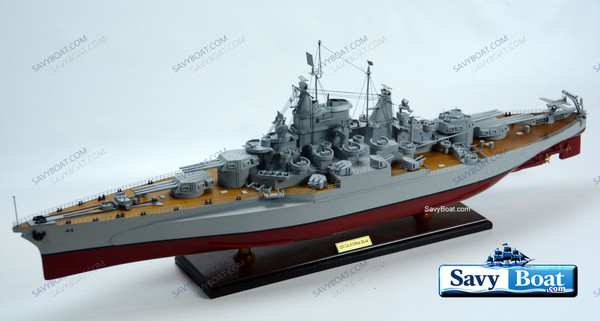

USS CALIFORNIA BATTLESHIP
SAVY DIRECT PRICE $849.96MSRP: $899.99USS CALIFORNIA BATTLESHIP FULLY BUILT AND READY TO DISPLAY QUALITY SHIP MODEL BEAUTIFUL MUSEUM QUALITY MODEL Dimension approx.: 37.5″ L x 7″ W x 14″ H USS California (BB‑44), the second of... -


HOHENTWIEL PADDLE STEAMSHIP
SAVY DIRECT PRICE $699.95MSRP: $749.99HOHENTWIEL PADDLE STEAMSHIP FULLY BUILT AND READY TO DISPLAY HIGH QUALITY SHIP MODEL Dimension approx.: 30″ (long) x 7″ (wide) x 13″ (high) The model is already built. THIS IS NOT A...
Description

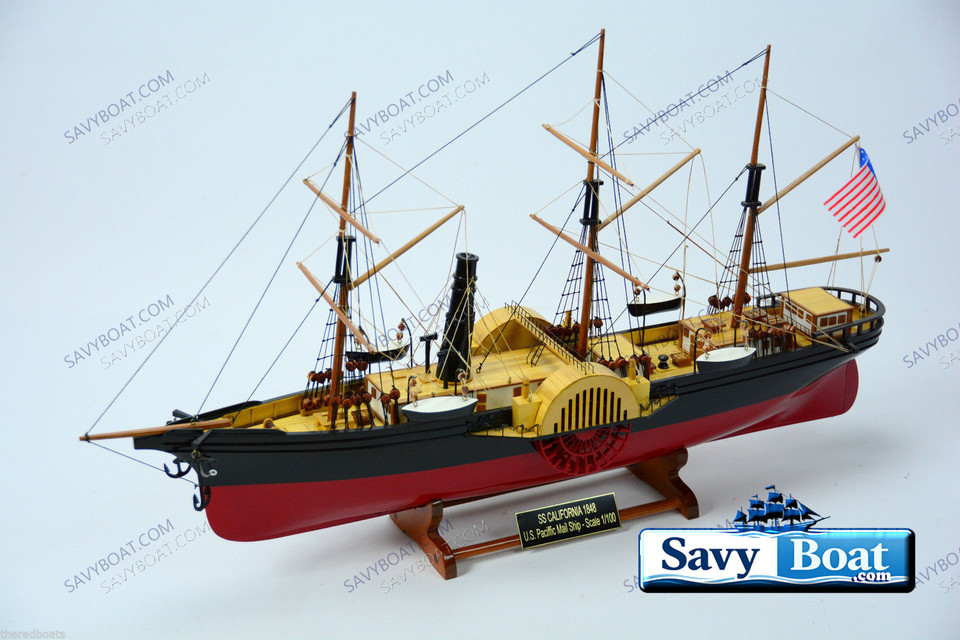
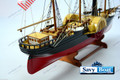
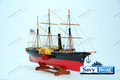
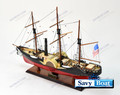
SS CALIFORNIA SIDE WHEEL, PADDLE STEAMER
FULLY BUILT AND READY TO DISPLAY BOAT MODEL
- Dimension approx.: 26″ (long) x 7″ (wide) x 18″ (high)
- The model is already built. THIS IS NOT A MODEL SHIP KIT
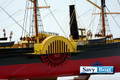
The SS California, launched on 19 May 1848, was the first vessel of the newly formed Pacific Mail Steamship Company and one of the earliest American steamships to cross into the Pacific. Built by master shipbuilder William H. Webb of New York, she embodied the ambition of a nation expanding westward. At 203 feet long with broad 26‑foot side paddle wheels, a 250‑horsepower side‑lever engine, and auxiliary sails, she was designed to carry mail, passengers, and freight between Panama and San Francisco — a route that would soon become vital to the booming American frontier.
Her maiden voyage began on 6 October 1848 under Captain Cleveland Forbes. The journey quickly proved the challenges of early steam navigation: overheating bearings, burst pipes, and boiler failures forced unscheduled stops in Rio de Janeiro and Valparaíso for repairs and recoaling. After 145 days, she reached Panama and prepared for the final leg northward. On 31 January 1849, she steamed out across the Pacific — just as news of gold discoveries in California electrified the world.
The Gold Rush transformed her voyage. What began with 60 passengers swelled to more than 375, all desperate to reach the new El Dorado. Fuel ran short, and the crew resorted to burning woodwork and spars to keep the engines turning. When the SS California finally entered San Francisco Bay on 28 February 1849, she became the first steamer ever sighted in the harbor, greeted by a 21‑gun salute from the U.S. Pacific Squadron. By the next morning, nearly her entire crew had deserted for the gold fields — a testament to the fever gripping the region.
For decades afterward, the SS California served the Panama–San Francisco route, carrying mail, freight, and thousands of passengers who relied on her steady paddle wheels to bridge the gap between the Atlantic and the Pacific. She proved the viability of steam navigation across the world’s largest ocean and helped knit together the rapidly developing American West.
In 1875, long after her pioneering years, she was converted from steam to sail and continued working for another twenty years. Her career ended around 1895, when she was wrecked off Pacasmayo, Peru — a quiet conclusion to a ship that had once been at the center of one of the most transformative moments in American history.
Today, the SS California is remembered as a landmark vessel: the first Pacific Mail steamer, a lifeline during the Gold Rush, and a symbol of the era when steam power began to conquer the world’s oceans.