








-
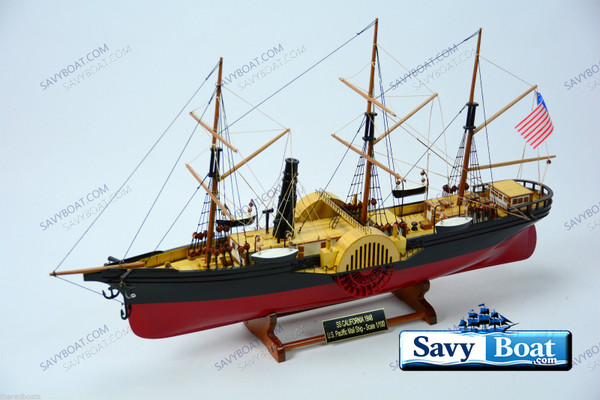

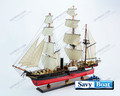
SS CALIFORNIA SIDEWHEEL PADDLE STEAMER
SAVY DIRECT PRICE $599.96MSRP: $649.99SS CALIFORNIA SIDE WHEEL, PADDLE STEAMER FULLY BUILT AND READY TO DISPLAY BOAT MODEL Dimension approx.: 26″ (long) x 7″ (wide) x 18″ (high) The model is already built. THIS IS NOT A... -


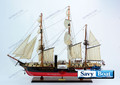
USS POWHATAN SIDE WHEEL STEAMSHIP W/ SAILS
SAVY DIRECT PRICE $799.96MSRP: $799.99USS POWHATAN SIDE WHEEL STEAMSHIP W/ SAILS FULLY BUILT AND READY TO DISPLAY QUALITY SHIP MODEL Dimension Approx.: 32″ (high) x 8″ (wide) x 28.5″ (high) The model is already built, -
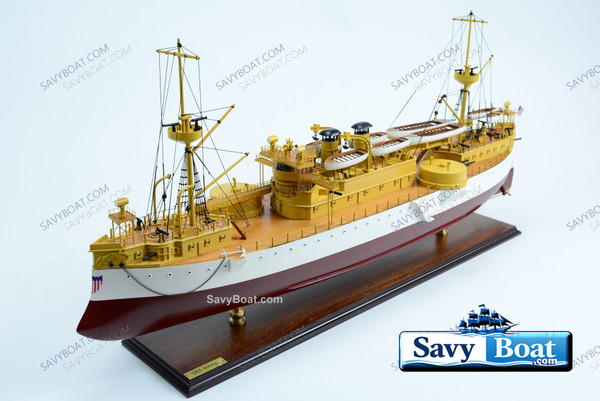
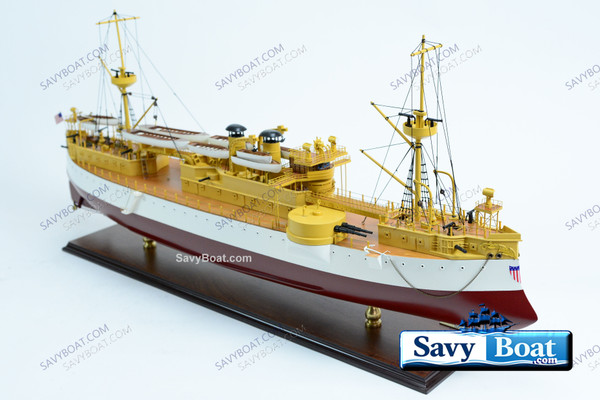
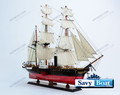
USS MAINE BATTLESHIP
SAVY DIRECT PRICE $849.96MSRP: $899.99USS MAINE SECOND CLASS BATTLESHIP FULLY BUILT AND READY TO DISPLAY, QUALITY SHIP MODEL Dimension Approx.: 32″L x 6.5″W x 14″H The model is already built, NOT a model ship kit Approximate scale...
Description

USS SUSQUEHANNA SIDE WHEEL PADDLE STEAMER
FULLY BUILT AND READY TO DISPLAY QUALITY SHIP MODEL
- Dimension Approx.: 38″ (high) x 10.5″ (wide) x 28″ (high)
- The model is already built, NOT a model ship kit
Across two very different eras of American naval power, the name USS Susquehanna was carried by ships that served in diplomacy, war, and global transport. Though separated by nearly seventy years, both vessels reflected the evolving mission of the U.S. Navy — from opening new horizons in the age of steam to carrying American soldiers across the Atlantic in World War I.
The first USS Susquehanna was a striking symbol of America’s early steam navy. Built at the New York Navy Yard and launched in 1850, she was a large side‑wheel steam frigate, 257 feet long and heavily armed with Dahlgren guns and Parrott rifles. Her broad paddle wheels and towering masts gave her a hybrid silhouette — part traditional sailing warship, part modern steam vessel — at a moment when navies around the world were transitioning into the industrial age.
Soon after commissioning, Susquehanna sailed as flagship of the East India Squadron, carrying Commodore Matthew C. Perry on his historic 1853 expedition to Japan. As Perry’s flagship, she stood at the center of the diplomatic mission that opened Japanese ports to American trade, marking one of the most consequential naval encounters of the 19th century.
During the Civil War, Susquehanna returned to service as part of the Union blockade. She captured Confederate and British blockade runners, supported amphibious operations including the assault on Port Royal Sound, and patrolled the Atlantic in defense of Union commerce. After years of intermittent service, she was finally decommissioned in 1866 and sold for scrap in 1883 — closing the career of a ship that helped usher the U.S. Navy into the steam era.
The World War I Troop Transport
The second vessel to bear the name began life far from American shores. Launched in 1899 as the German ocean liner SS Rhein, she was a steel‑hulled passenger ship built by Blohm & Voss in Hamburg. Interned in Baltimore at the outbreak of World War I, she was seized by the U.S. government in 1917 and converted into a troop transport, commissioned as USS Susquehanna (ID‑3016).
During the war, she made eight round‑trip voyages to France, carrying more than 18,000 American soldiers through waters threatened by mines and German U‑boats. Her commanding officers — Captain Zachariah H. Madison and Commander Allen B. Reed — were awarded the Navy Cross for their leadership under hazardous conditions. After the Armistice, Susquehanna completed seven more voyages, returning over 15,500 troops home from Europe.
Decommissioned in 1919, she briefly returned to commercial service before being laid up in 1922 and scrapped in 1928.
Together, the two ships named USS Susquehanna trace a sweeping arc of American naval history. One helped open Japan to the world and enforced the Union blockade during the Civil War; the other carried America’s soldiers across the Atlantic in the largest conflict of the early 20th century. Their stories reflect diplomacy, war, and global movement — a legacy carried forward under a single name.