









-


RMS CAMPANIA
SAVY DIRECT PRICE $629.96MSRP: $689.99RMS CAMPANIA, CUNARD LINES STEAMSHIP Dimension Approx.: 32″ (long) x 4″ (wide) x 12″ (high) This is a fully built model. it is NOT a kit When RMS Campania slid down the ways at Fairfield... -
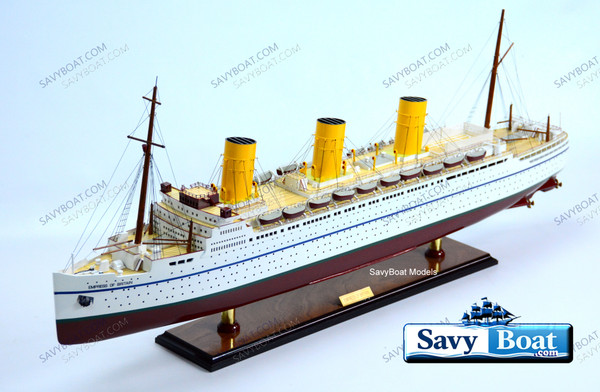

RMS EMPRESS OF BRITAIN
SAVY DIRECT PRICE $899.96MSRP: $999.99EMPRESS OF BRITAIN FULLY BUILT AND READY TO DISPLAY MUSEUM QUALITY SHIP MODEL Dimension approx.: 33″ L x 5.5″W x 13″ H Scale 1:250 The model is already built, NOT a model ship... -


RMS EMPRESS OF IRELAND
SAVY DIRECT PRICE $999.96MSRP: $1,099.99RMS EMPRESS OF IRELAND, CANADIAN PACIFIC LINE FULLY BUILT AND READY TO DISPLAY MUSEUM QUALITY SHIP MODEL Dimension approx.: 36″ L x 5.5″W x 13″ H Scale 1:250 The model is already built,...
Description

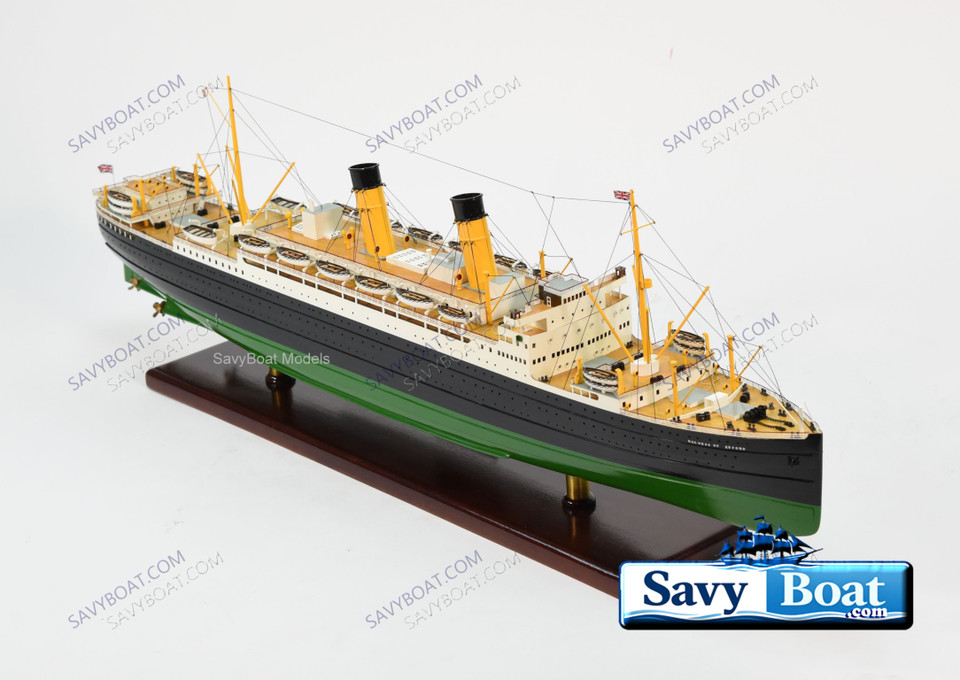
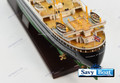
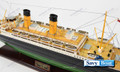
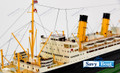
SS Duchess of Bedford, Canada Pacific Line
FULLY BUILT AND READY TO DISPLAY MUSEUM QUALITY SHIP MODEL
- BEAUTIFUL MUSEUM QUALITY MODEL
- Open die cut side hull windows, NOT painted like those built by most other companies.
- Dimension Approx.: 36″ L x 5.5″W x 12″ H
- SCALE 1:200
- The model is 100% hand built by artisans from scratch
- Hand-painted to match the actual ship.
- The model is already built, NOT a model ship kit
SS Duchess of Bedford
She entered the world in 1928 at Clydebank, one of four near‑identical Canadian Pacific liners meant to slip deeper into the St. Lawrence than the great Empress ships ever could. They called her the Duchess of Bedford, and from the beginning she had a reputation: elegant, modern, and equipped with comforts that felt almost extravagant for the era, yet prone to a lively, unpredictable roll that earned her and her sisters the nickname “the Drunken Duchesses.”
In her early years she carried a fascinating cross‑section of the world. In 1931, Montagu Norman paced her decks, wrestling with the news that Britain had abandoned the gold standard. Two years later, writer Elspeth Huxley sat aboard her, shaping the life of Lord Delamere into prose as the Atlantic heaved beneath the hull. The Duchess was a working ship, but she had a way of becoming a backdrop to history.
Everything changed in 1939. With war declared, the Duchess of Bedford was taken into Admiralty service and thrust into the hard, relentless work of a troopship. She carried officials to India, then joined the desperate evacuation of Singapore. In January 1942 she brought nearly two thousand men of the 18th Infantry Division toward a city already on the brink, arriving just ten days before its fall. She left again with evacuees, part of a grim procession of ships fleeing a collapsing front.
Her most famous moment came later that year. In November 1942, she sailed in the vast armada of Operation Torch, carrying American troops from Greenock to the shores of Algeria. At Arzew, she landed the men of the U.S. 16th Infantry Regiment—America’s first major step into the North African campaign. From there she moved with the war’s momentum: Sicily, Salerno, and finally the long journey from Lagos to India in 1944, transporting West African soldiers bound for the Burma front.
When peace returned, the Canadian Pacific fleet was battered and diminished. The Duchess survived, and in 1947 she was sent to Govan for a deep refit. Her interiors were rebuilt, her passenger capacity reduced, and her identity reshaped. Plans to rename her Empress of India evaporated with India’s independence, so she emerged instead as the Empress of France, a title she carried into the postwar era.
She resumed the Liverpool–Montreal route, sleeker after a 1958–59 modernization that streamlined her funnels and updated her accommodations. But the world was changing fast. Airliners were shrinking oceans, and the great transatlantic liners were losing their place.
In 1960, after more than three decades of crossings, evacuations, invasions, and migrations, the Empress of France made her final voyage—to the breakers at Newport. Her steel was cut apart, but her story remains: a ship that lived through peace and war, carrying bankers, writers, soldiers, evacuees, and entire chapters of the twentieth century across the Atlantic.