









-


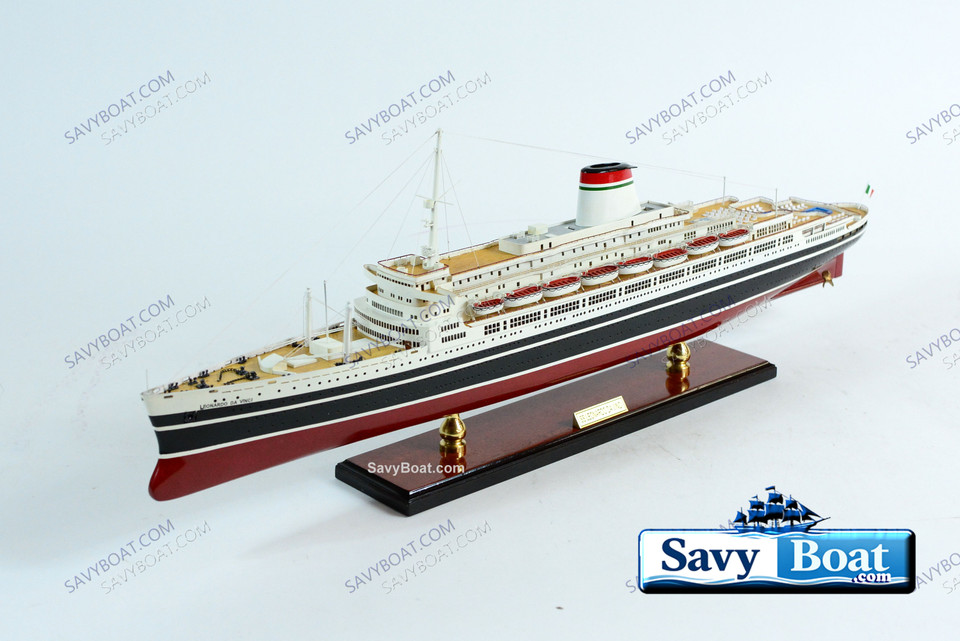
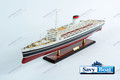
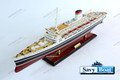
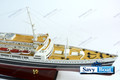
SS LEONARDO DA VINCI OCEAN LINER (WHTE HULL)
SAVY DIRECT PRICE $799.96MSRP: $849.99SS LEONARDO DA VINCI OCEAN LINER (WHTE HULL) FULLY BUILT AND READY TO DISPLAY SHIP MODEL Dimension approx.: 34″ L x 4.25″ W x 12.5″ H The mod -
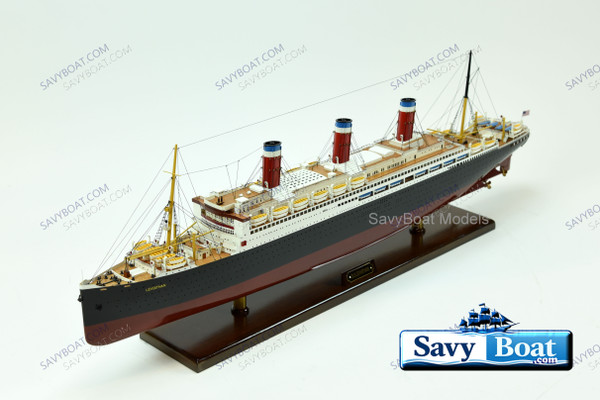
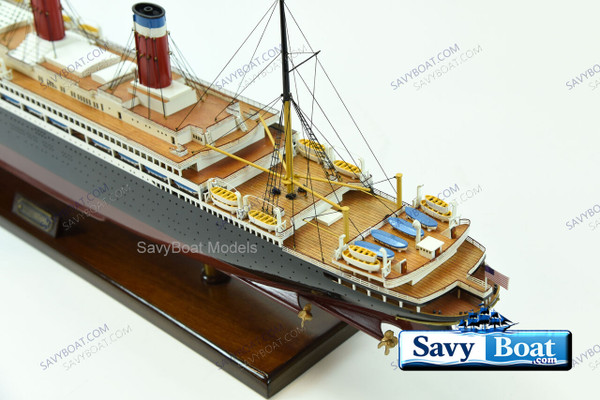
SS LEVIATHAN OCEAN LINER
SAVY DIRECT PRICE $999.96MSRP: $1,049.99SS LEVIATHAN OCEAN LINER FULLY BUILT AND READY TO DISPLAY BOAT MODEL Dimension approx.: 38″ L x 4.5″ W x 12″ H Approx Scale 1/300 The model is already built. THIS IS NOT A MODEL -
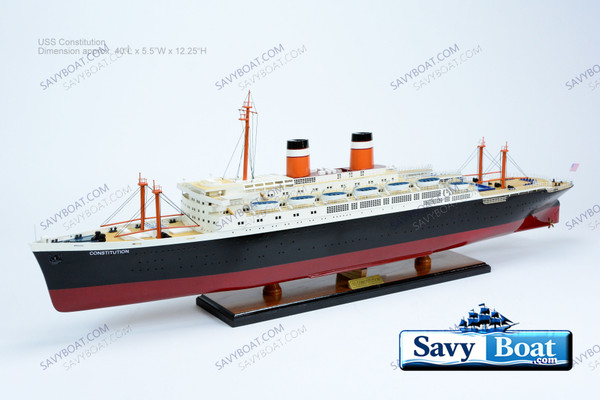

SS CONSTITUTION OCEAN LINER
SAVY DIRECT PRICE $799.96MSRP: $849.99SS CONSTITUTION OCEAN LINER FULLY BUILT AND READY TO DISPLAY BOAT MODEL Dimension approx.: 40"L x 6.5"W x 13.5"H The model is already built. THIS IS NOT A MODEL SHIP KIT The SS...
Description

SS LEONARDO DA VINCI OCEAN LINER (BLACK HULL)
FULLY BUILT AND READY TO DISPLAY SHIP MODEL
- Dimension approx.: 34″ L x 4.25″ W x 12.5″ H
- The model is already built. THIS IS NOT A MODEL SHIP KIT
When the SS Leonardo da Vinci was launched at Genoa’s Ansaldo Shipyards on 7 December 1958, she carried the weight of a nation’s hopes. Italy had lost the beloved SS Andrea Doria only two years earlier, and the new ship was conceived not merely as a replacement, but as a statement of resilience, innovation, and renewed maritime pride. Christened by Carla Gronchi, wife of President Giovanni Gronchi, Leonardo da Vinci emerged as one of the most technologically advanced ocean liners of her era.
Her design reflected lessons learned from tragedy. Extended watertight bulkheads, motorized lifeboats capable of launching at a 25‑degree list, and dual engine compartments that allowed independent propulsion made her one of the safest ships afloat. To improve stability, engineers added 3,000 metric tons of iron ballast, giving her a steadiness that Andrea Doria had lacked. At 232.6 meters long with a 28.1‑meter beam, she was slightly larger and significantly more robust than her predecessor.
Inside, Leonardo da Vinci showcased the height of Italian postwar luxury. She featured infrared‑heated swimming pools, retractable stabilizer wings, full air‑conditioning, and private bathrooms in all first‑ and cabin‑class cabins — and in most tourist‑class cabins as well. Her designers even included provisions for future nuclear propulsion, a bold gesture toward the technological optimism of the 1960s. Elevators, a hospital, gymnasium, crew mess halls, and advanced radar and automatic steering systems made her a thoroughly modern liner.
Entering service in 1960, Leonardo da Vinci joined the SS Cristoforo Colombo on the prestigious Italy–New York run. For several years she was one of the Italian Line’s premier transatlantic vessels, admired for her speed, comfort, and striking profile. But the arrival of the larger SS Michelangelo and SS Raffaello in 1965 shifted the fleet’s balance, and Leonardo da Vinci gradually transitioned toward cruise service as air travel eroded demand for ocean crossings.
By 1976, she was the last Italian Line passenger ship still operating on the North Atlantic, a final link to the golden age of Italian transatlantic travel. In 1977, she was transferred to Italia Crociere for cruise operations, but the venture was short‑lived. After a brief period of service, she was laid up in 1978, her career quietly winding down. In 1982, she was scrapped — ending more than two decades of service.
Named for Italy’s greatest inventor and artist, the SS Leonardo da Vinci symbolized the nation’s postwar maritime resurgence. She blended luxury with engineering innovation, restored confidence after the Andrea Doria disaster, and marked the transition from traditional ocean travel to the modern cruise era. Today she is remembered as one of the most advanced and elegant liners ever built by the Italian Line — a ship that carried both the legacy of the past and the promise of the future.