







-
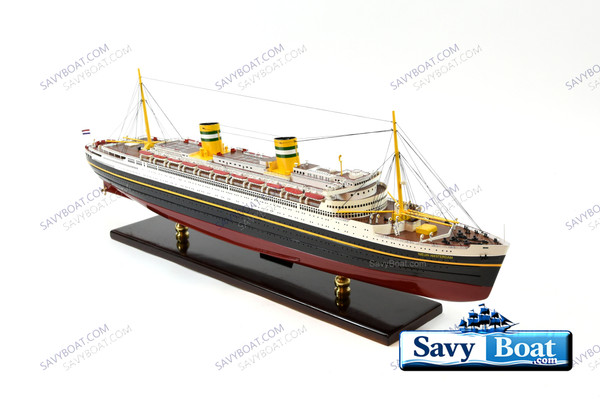
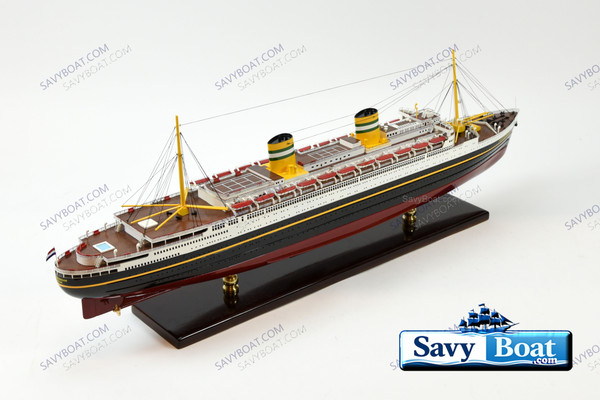
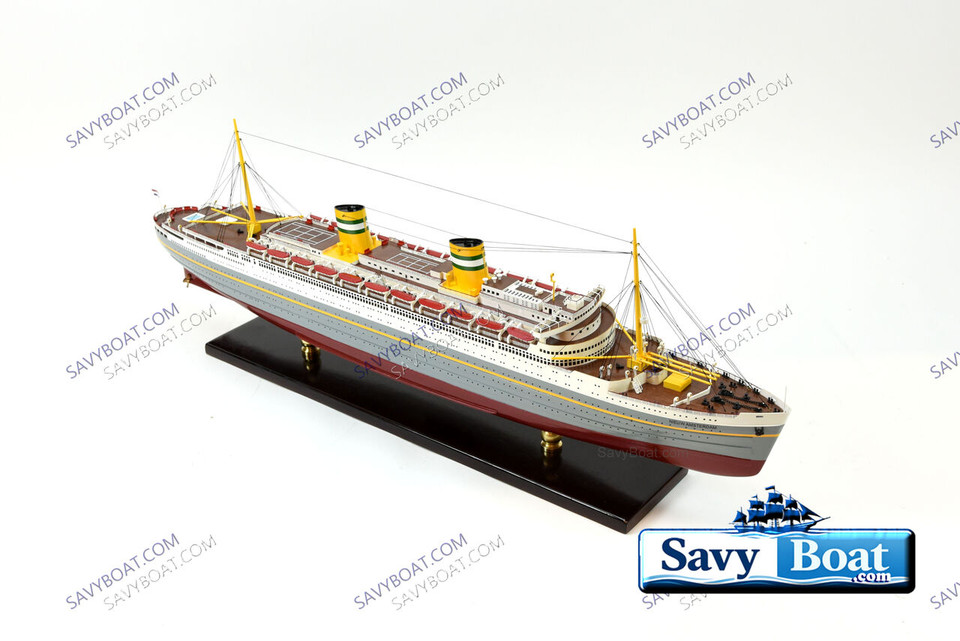
SS NIEUW AMSTERDAM DUTCH OCEAN LINER (BLK)
SAVY DIRECT PRICE $899.96MSRP: $999.99SS NIEUW AMSTERDAM DUTCH OCEAN LINER (BLK) FULLY BUILT AND READY TO DISPLAY, QUALITY SHIP MODEL Dimension Approx.: 36.5″L x 4.75″W x 12″H Approximately 1:250 scale The model is already built,... -


SS GRIPSHOLM OCEAN LINER
SAVY DIRECT PRICE $899.96MSRP: $999.99SS GRIPSHOLM 1957 STEAM SHIP/OCEAN LINER FULLY BUILT AND READY TO DISPLAY, QUALITY SHIP MODEL Dimension approx.: 40″ (long) x 4.75″ (wide) x 12″ (high) This beautiful model is already built,... -
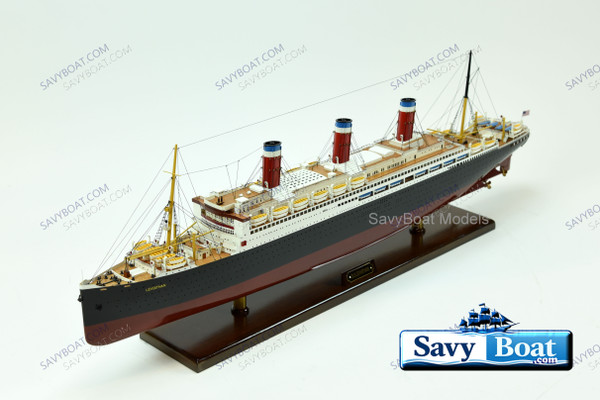
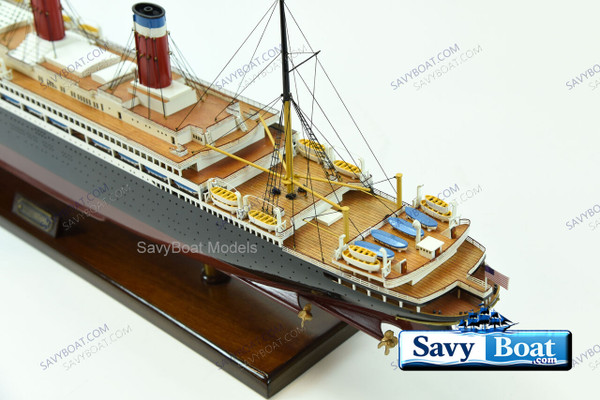
SS LEVIATHAN OCEAN LINER
SAVY DIRECT PRICE $999.96MSRP: $1,049.99SS LEVIATHAN OCEAN LINER FULLY BUILT AND READY TO DISPLAY BOAT MODEL Dimension approx.: 38″ L x 4.5″ W x 12″ H Approx Scale 1/300 The model is already built. THIS IS NOT A MODEL
Description

SS NIEUW AMSTERDAM DUTCH OCEAN LINER GRAY
FULLY BUILT AND READY TO DISPLAY, QUALITY SHIP MODEL
- Dimension Approx.: 36.5″L x 4.75″W x 12″H
- Approximately 1:250 scale
- The model is already built, NOT a model ship kit
When the SS Nieuw Amsterdam entered service in 1938, she was hailed as the pride of the Netherlands — a national flagship built to stand alongside the great liners of the world. At 758 feet long and powered by eight steam turbines driving twin screws, she was the largest, fastest, and most technologically advanced ship ever constructed in the Netherlands. For Holland America Line, she succeeded Statendam as the company’s premier vessel, a “ship of state” in the same spirit that Normandie was for France and Queen Mary for Britain.
Her design was a triumph of Dutch Art Deco, created by Huibert Prins and executed by a team of 15 architects and 50 artists. Inside, she offered understated elegance: pastel colors, aluminum motifs, fluorescent lighting, and spacious public rooms. Her first‑class dining saloon — a windowless, glowing chamber of gold‑leaf columns, tinted mirrors, satinwood furniture, and Murano glass — rivaled the finest rooms afloat. She was also the first ocean liner with an air‑conditioned theater, and the first in the world to give every first‑class cabin an en‑suite bathroom. When new, she was considered the most fire‑protected ship afloat.
Her maiden voyage in May 1938 was a triumph. She crossed from Southampton to Hoboken at an average of 21.7 knots, arriving ten hours early and earning praise as the “Ship of Tomorrow.” Though not as large as the biggest British or French liners, she quickly built a loyal following. Her seasonal schedule alternated between transatlantic crossings and winter cruises to the Caribbean and South America, where her elegance and smooth handling made her a favorite among seasoned travelers.
Everything changed in 1939. As Europe descended into war, Nieuw Amsterdam found herself carrying refugees, including more than 1,200 passengers on a single voyage — far above her rated capacity. She was briefly detained by the Royal Navy, inspected for contraband, and allowed to continue. After Germany invaded the Netherlands in May 1940, she was laid up in Hoboken, her future uncertain.
By late 1940, she was requisitioned and transformed into an Allied troopship. More than 2,000 tons of luxury fittings were removed and stored; her cabins were converted to berths for 6,800 troops; her portholes were blacked out; and she was armed with 36 defensive guns. Thanks to her speed, she often sailed unescorted.
For the next 73 months, Nieuw Amsterdam served across the globe — the Indian Ocean, the Pacific, the Middle East, Africa, Australia, and the North Atlantic. She carried 378,361 troops and civilians and steamed more than 530,000 nautical miles, including 17 round‑trip Atlantic crossings. She was present during the Battle of Madagascar, repatriated the 9th Australian Division, and later carried thousands of Dutch civilians — including children weakened by Japanese internment — back toward home.
When the war ended, Nieuw Amsterdam returned to Rotterdam on April 11, 1946, greeted by crowds and a band on the quay. Her refit was monumental — more expensive than her original construction. Every surface was restored: 374 bathrooms rebuilt, 12,000 square feet of glass replaced, thousands of chairs and tables refinished, and original artworks returned from storage in San Francisco. By late 1947, she resumed her transatlantic service, once again the flagship of Holland America Line.
Through the 1950s she remained immensely popular, often sailing fully booked. She alternated between crossings and winter cruises, including a 50‑day circumnavigation of South America. Her understated elegance, smooth handling, and loyal clientele made her one of the most successful liners of the postwar era.
By the late 1960s, jet travel had eroded the transatlantic market. Nieuw Amsterdam shifted to full‑time cruising from Port Everglades, Florida, and in 1971 ended her scheduled crossings entirely. After 36 years of service, she was withdrawn in 1973 and scrapped in Taiwan in 1974.
SS Nieuw Amsterdam remains one of the most beloved liners of the 20th century — a ship admired not for record‑breaking size or speed, but for her grace, reliability, and refined Dutch artistry. She was the Netherlands’ greatest ocean liner, a wartime workhorse, and a postwar ambassador of hospitality. Her story stands as a testament to the resilience of a ship that served her nation in peace and war, and carried generations of travelers across the world’s oceans.