





-

 img:low-3-bottom-with-special-offer.pngimg:low-3-bottom-with-special-offer.png
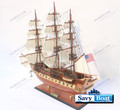
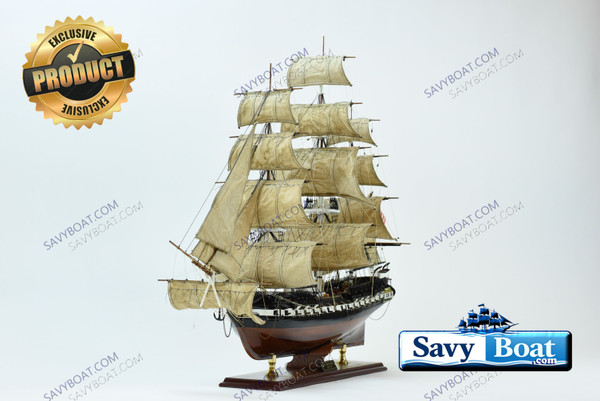
USS CONSTITUTION EXCLUSIVE SPECIAL EDITION 1:96 scale
SAVY DIRECT PRICE $100.00 - $1,099.96USS CONSTITUTION 1:96 SCALE FULLY BUILT AND READY TO DISPLAY MUSEUM QUALITY SHIP MODEL LARGE MUSEUM QUALITY MODEL Dimension Approx.: 37″ L x 11″ W x 26″ H Scale 1: -
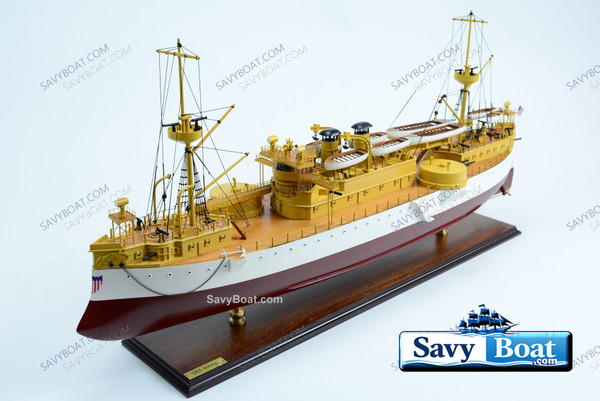
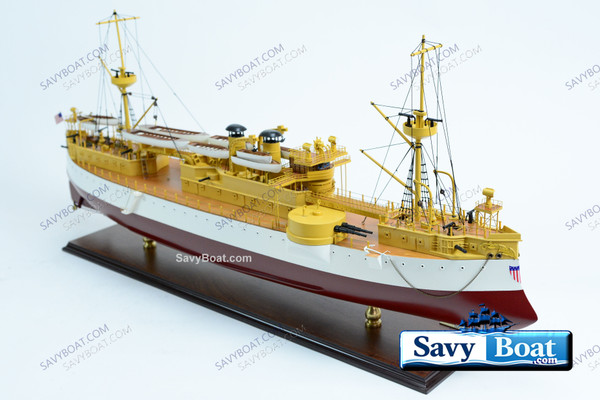
USS MAINE BATTLESHIP
SAVY DIRECT PRICE $849.96MSRP: $899.99USS MAINE SECOND CLASS BATTLESHIP FULLY BUILT AND READY TO DISPLAY, QUALITY SHIP MODEL Dimension Approx.: 32″L x 6.5″W x 14″H The model is already built, NOT a model ship kit Approximate scale... -
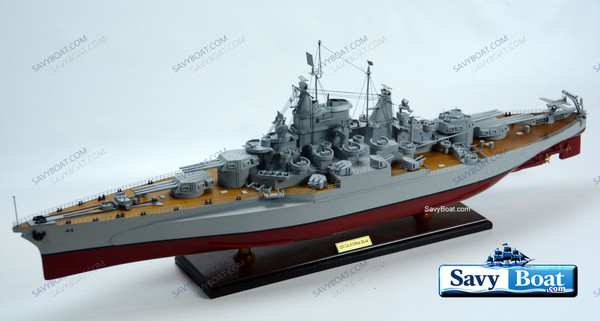

USS CALIFORNIA BATTLESHIP
SAVY DIRECT PRICE $849.96MSRP: $899.99USS CALIFORNIA BATTLESHIP FULLY BUILT AND READY TO DISPLAY QUALITY SHIP MODEL BEAUTIFUL MUSEUM QUALITY MODEL Dimension approx.: 37.5″ L x 7″ W x 14″ H USS California (BB‑44), the second of...
Description

USS CONSTITUTION
FULLY BUILT AND READY TO DISPLAY MUSEUM QUALITY SHIP MODEL
- LARGE MUSEUM QUALITY MODEL
- Dimension Approx.: 25″L x 5.5″W x 22″H
- The model is already built, NOT a model ship kit
- Handcrafted from scratch using finest woods & metal fittings
- Freight shipping. Please contact us with any questions.
USS CONSTITUTION began as an answer to fear. In the 1780s and early 1790s, Barbary pirates seized American merchant ships with impunity — “11 American ships were captured in 1793 alone” — and the young United States had no navy strong enough to protect its own commerce. Out of this vulnerability came the Naval Act of 1794, and with it, the order to build six great frigates. Among them was a ship whose name President George Washington personally approved: Constitution.
Her construction was a feat of ambition. At Edmund Hartt’s Boston shipyard, workers shaped a hull “21 inches thick” from pine, oak, and the nearly indestructible southern live oak harvested — tragically — by enslaved laborers whose forced work, as one historian noted, was considered “fundamental to the job.” She was long, narrow, and heavily built, a radical design by Joshua Humphreys meant to outrun ships of the line and overpower any frigate afloat. She was, from the keel up, a statement: America would not be pushed aside.
Her launch in 1797 was dramatic. Twice she slid only a few dozen feet before her immense weight sank the ways into the ground. Only after a month of rebuilding did she finally glide into Boston Harbor, christened with Madeira wine and ready for a life at sea.
Early Trials and First Battles
Her first years were spent in the Quasi-War with France, patrolling the Atlantic, chasing privateers, and learning the hard lessons of command. She dueled a British frigate in a friendly test of speed, recaptured American vessels, and even struck a reef off Cape François. She was not yet a legend — but she was becoming seasoned.
Then came the Barbary Wars. Under Commodore Edward Preble, she became the flagship of a squadron determined to break the power of Tripoli. She witnessed the daring nighttime raid that burned the captured USS Philadelphia, bombarded Tripoli’s defenses, and supported the Marines’ march on Derne. She even hosted the signing of the peace treaty that freed American prisoners — a symbolic moment aboard a ship already earning respect.
The War That Made Her Immortal
But it was the War of 1812 that transformed Constitution into Old Ironsides.
When Captain Isaac Hull took command, he found her fouled with barnacles — “ten wagon loads” of them — and restored her speed. That speed saved her life during a 57‑hour chase by a British squadron, where her crew kedged, towed, and even pumped drinking water overboard to escape.
Then, on August 19, 1812, she met HMS Guerriere.
The British frigate fired first. Her shots splintered spars and tore canvas — but when they struck the hull, they bounced away. One American sailor shouted the words that would echo through history: “Huzzah! Her sides are made of iron!” In a brutal, close-range fight, Constitution shattered Guerriere’s masts, left her a wreck, and forced her surrender. Hull refused to take Captain Dacres’ sword, saying he could not accept it from a man who had fought so bravely.
She went on to defeat HMS Java, Pictou, Cyane, and Levant, each victory reinforcing her myth. She was undefeated — a symbol of American resilience when the nation desperately needed heroes.
A Long Life of Service
After the war, she circled the globe, served as a flagship in multiple squadrons, trained midshipmen during the Civil War, and even carried American art to the Paris Exposition of 1878. She was nearly scrapped more than once, but public outcry — fueled by national pride — saved her every time.
In 1934 she toured 90 American ports. In 1997 she sailed under her own power for her 200th birthday. In 2012 she sailed again to commemorate her victory over Guerriere.
A Living Symbol
Today she rests at Charlestown Navy Yard, still a commissioned U.S. Navy ship, crewed by active-duty sailors whose assignment is considered an honor. Her mission is simple but profound: to keep the memory of America’s naval heritage alive.
Visitors walk her decks for free, touching the same timbers that once deflected British cannon fire. She is not just a museum — she is a survivor, a national icon, and the last living heartbeat of the Age of Sail.