







-
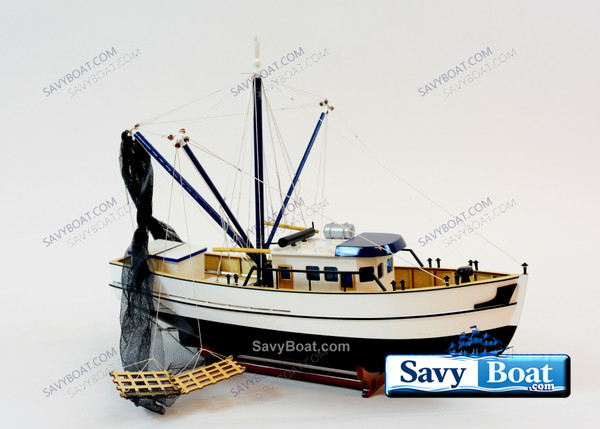

SHRIMP BOAT
SAVY DIRECT PRICE $469.96MSRP: $499.99SHRIMP BOAT FULLY BUILT AND READY TO DISPLAY, QUALITY SHIP MODEL Dimension approx.: 23″ L x 16″ W x 16″ H The model is already built. THIS IS NOT A MODEL SHIP KIT -
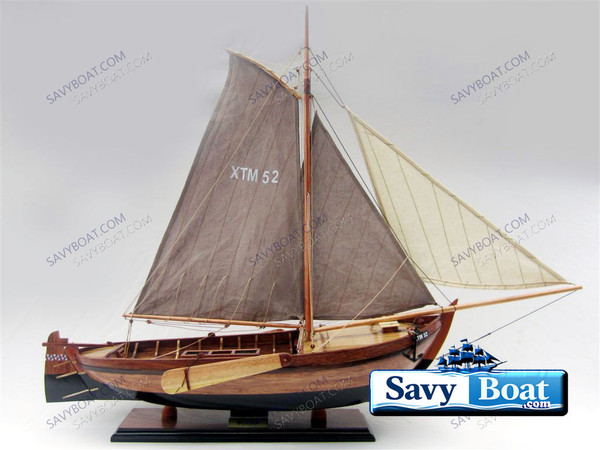
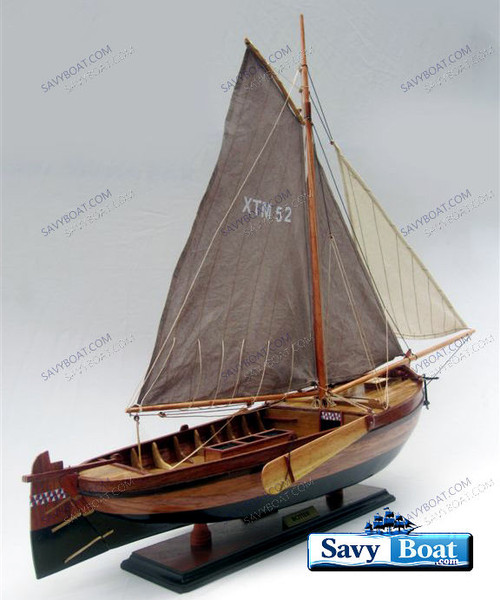
BOTTER SAIL BOAT
SAVY DIRECT PRICE $699.96MSRP: $749.99BOTTER SAIL BOAT FULLY BUILT AND READY TO DISPLAY MUSEUM QUALITY SHIP MODEL Dimension approx.: 31″ (long) x 7″ (wide) x 6″ (high) The model is already built. THIS IS NOT A MODEL SHIP... -
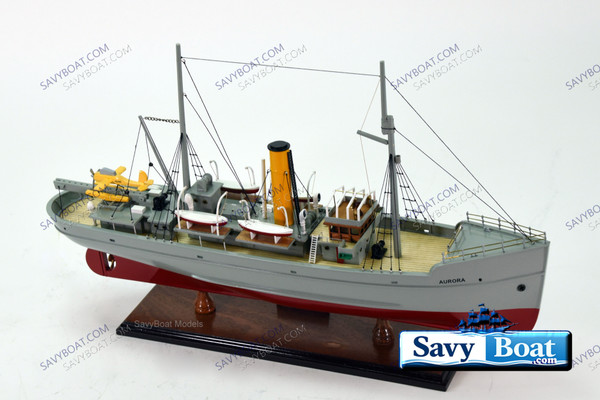

AURORA FISHING BOAT
SAVY DIRECT PRICE $479.96MSRP: $529.99AURORA FISHING BOAT FULLY BUILT AND READY TO DISPLAY, SHIP MODEL Dimension approx.: 23″ (high) x 5″ (wide) x 13.5″ (high) The model is already built. THIS IS NOT A MODEL SHIP KIT When...
Description

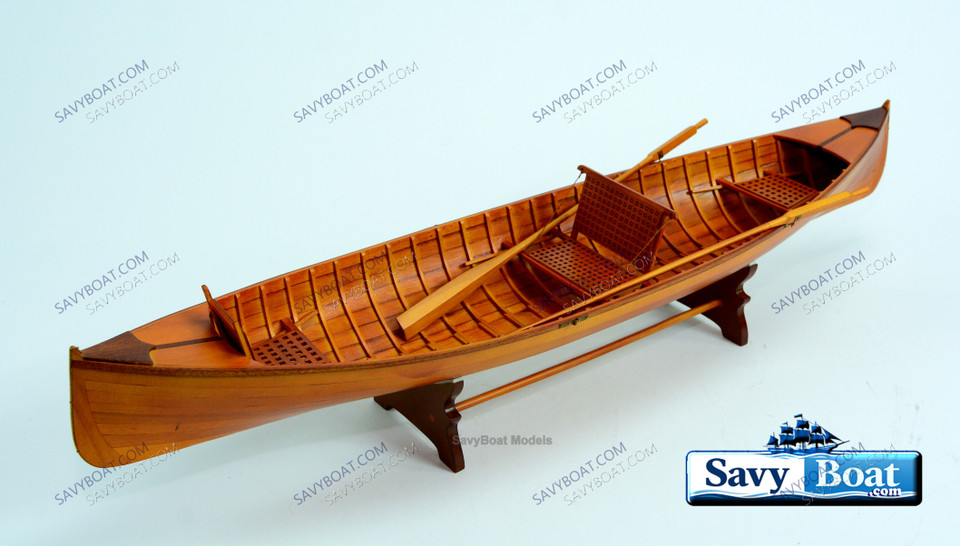
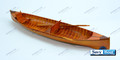
ADIRONDACK GUIDE BOAT
FULLY BUILT AND READY TO DISPLAY, QUALITY SHIP MODEL
- Dimension approx.: 31″ (long) x 7″ (wide) x 6″ (high)
- The model is already built. THIS IS NOT A MODEL SHIP KIT
Long before roads reached the deep interior of the Adirondacks, before rail lines and automobiles made the mountains accessible, there was the guideboat — a slender, elegant craft built to slip across still lakes, wind through narrow streams, and be carried lightly over the forest trails between them. Born in the 1840s, the Adirondack guideboat was not merely a boat; it was a lifeline in a wilderness of water and woods.
The Adirondacks demanded a vessel unlike any other. The region’s guides needed something fast, light, and strong — a boat that one man could portage on his shoulders while still carrying two or three passengers and their gear. The result was a uniquely American creation: a 16‑foot craft with a 38‑inch beam, weighing as little as 60 pounds, yet capable of handling rough water and heavy loads.
Its construction blended frontier ingenuity with remarkable craftsmanship: A pine bottom board forming the keel, Spruce ribs, often carved from naturally curved roots, Cedar planking, fastened with copper or brass tacks, Fixed‑pin oarlocks for efficient rowing, and a profile reminiscent of a canoe, but built like a finely crafted wooden skiff
This combination of lightness, strength, and speed made the guideboat the perfect tool for the rugged, roadless Adirondack interior.
By the mid‑19th century, the Adirondacks were drawing sportsmen, writers, and wealthy travelers seeking wilderness adventure. Local guides — part woodsman, part boatman, part host — became essential figures in this growing tourism economy. Their guideboats were their livelihood.
These boats carried Hunters to remote deer grounds, Anglers to hidden trout ponds, Tourists across chains of lakes and rivers, Supplies to isolated camps and lodges.
They were used for “hounding” deer, “jacking” at night with lanterns, and navigating the labyrinth of waterways that defined the region. By the 1880s and 1890s, guideboats dominated Adirondack travel, with hundreds built each year by master craftsmen like Dwight and Lewis Grant of Boonville.
As the Adirondacks became a destination for recreation and retreat, the guideboat became a cultural emblem — a symbol of the region’s wilderness heritage and the skill of the men who built and rowed them. Only a handful of builders were considered “authentic,” and their boats were prized for their balance, speed, and beauty.
The guideboat’s form — long, narrow, and perfectly proportioned — became iconic. It represented not just transportation, but a way of life rooted in self‑reliance, craftsmanship, and deep knowledge of the land.
With the arrival of roads, automobiles, and motorboats in the 20th century, the practical need for guideboats faded. Many were lost, abandoned, or left to rot in barns. But the design never disappeared. Enthusiasts, historians, and craftsmen kept the tradition alive, recognizing the guideboat as one of America’s finest wooden boat designs.
In 1962, the Willard Hanmer Guideboat Race began in Saranac Lake, celebrating the craft and the men who built it. Modern builders — from small workshops to specialized boatshops — continue to produce guideboats using both traditional and modern methods. Some sell for tens of thousands of dollars, reflecting their status as functional works of art.
Today, the Adirondack guideboat stands as a testament to the ingenuity of 19th‑century craftsmen and the enduring spirit of the North Woods. Lightweight, swift, and exquisitely built, it remains one of the most admired small boats in America — a vessel that carries with it the history, culture, and wilderness of the Adirondacks.
A boat born of necessity, perfected by hand, and preserved by love.