







-


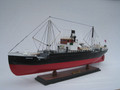
SS MARTHA MOVIE CLASSIC SHIP
SAVY DIRECT PRICE $629.96MSRP: $669.99SS MARTHA SHIP FROM DANISH CULT COMEDY FILM "MARTHA" Dimension Approx.: 27.5L x 4.5W x 11.5H (inch) This is a fully built model. it is NOT a kit Long before she became one of... -
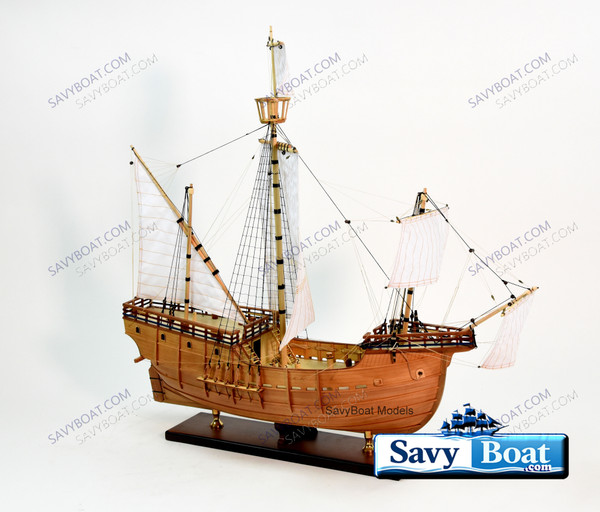
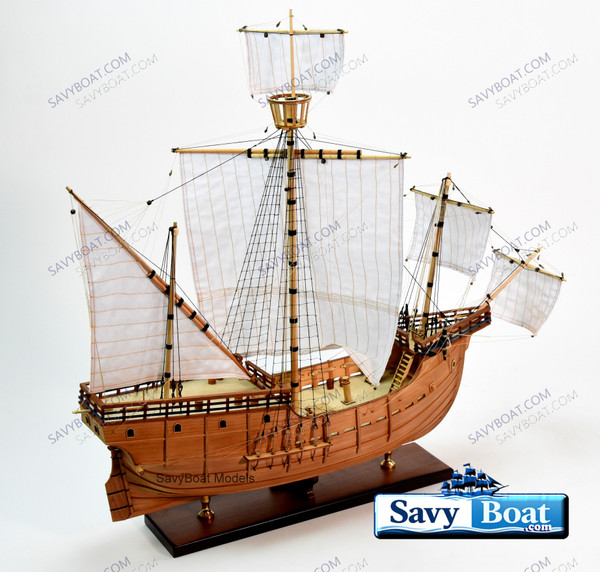
THE MATHEW (1497) MERCHANT SHIP
SAVY DIRECT PRICE $1,099.96MSRP: $1,199.99THE MATHEW (1497) MERCHANT SHIP FULLY BUILT AND READY TO DISPLAY, QUALITY SHIP MODEL LARGE MUSEUM QUALITY MODEL Dimension Approx.: 32″ (long) x 13″ (wide) x 30″ (high) The mo -
 img:low-2-bottom-with-special-offer.pngimg:low-2-bottom-with-special-offer.png
NV SAVANNAH ATOMIC MERCHANT SHIP
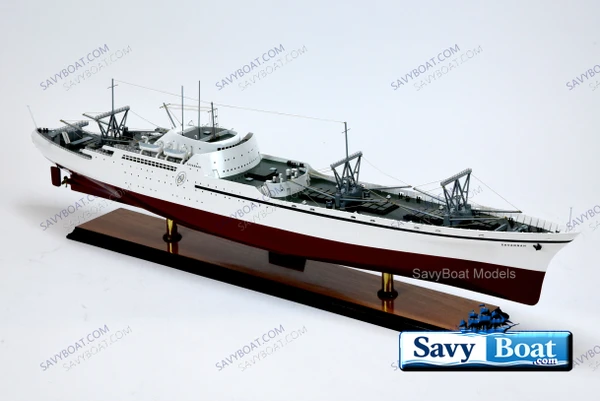
SAVY DIRECT PRICE $100.00 - $989.96NS SAVANNAH - WORLD'S FIRST ATOMIC MERCHANT SHIP FULLY BUILT AND READY TO DISPLAY, QUALITY SHIP MODEL Dimension approx.: 38″ L x 5″ W x 11″ H The model is already built. THIS IS NOT A...
Description

MS MARTHA (MARTHA BAKKE) MERCHANT SHIP
FULLY BUILT AND READY TO DISPLAY, QUALITY SHIP MODEL
- Dimension approx.: 29L x 4.5W x 12H
- The model is already built. THIS IS NOT A MODEL SHIP KIT
She entered the world in an era when the great postwar merchant fleets were still the lifeblood of global trade. In the mid‑1950s, long before containers reshaped the seas, the Norwegian firm D/S A/S Jeanette Skinner placed an ambitious order for a new deep‑sea cargo ship. She would be built in Sweden, at the renowned A/B Götaverken yard in Göteborg, and she would carry a name that echoed the traditions of Haugesund’s maritime families: Martha Bakke.
Her keel was laid in a time of optimism, and when she slid down the ways on 2 March 1960, she embodied the confidence of a world rebuilding and expanding. At 551 feet long with a beam of over 71 feet, she was a powerful, purposeful vessel — a classic general cargo ship with the added advantage of refrigerated holds, giving her access to the lucrative trades in fruit, meat, and dairy. With nearly 700,000 cubic feet of cargo space and a forest of cranes and winches, she was built to load anything, anywhere, under any conditions.
For her owners in Haugesund, she became a workhorse of the Knutsen fleet. Through the 1960s she ranged across the world’s oceans, calling at ports from Europe to Asia, from the Americas to Africa. She carried machinery, textiles, frozen produce, and all the varied freight that defined the break‑bulk era. Her refrigerated compartments made her especially valuable, and she became a familiar sight in ports where cold storage cargo was king.
But the shipping world was changing. By the end of the decade, ships were growing larger, more specialized, and more efficient. To keep pace, Martha Bakke underwent a dramatic transformation. In 1970, she steamed to Kawasaki Heavy Industries in Kobe, where she was lengthened, rebuilt, and modernized. Her deadweight increased, her internal layout expanded to nine holds, and she received a new suite of cranes — including heavy‑lift gear capable of handling loads up to 40 tons. The rebuild gave her a second life, extending her relevance in a rapidly evolving industry.
Through the 1970s and early 1980s, she changed hands several times, though she remained tied to her Norwegian roots. But the rise of containerization was relentless. Ships like Martha Bakke, designed for the old style of cargo handling, were being pushed aside by standardized boxes and automated terminals. By 1983, she was sold to a Panamanian company and renamed KNUT SUPPORTER, her role shifting from ocean‑roaming freighter to storage and service vessel for an Indonesian oil operation. It was a quieter life, far from the open sea, but it kept her useful a little longer.
Her final journey came in 1985, when she was sold for scrap. After a quarter‑century of service — from the cold waters of Scandinavia to the warm seas of Southeast Asia — she arrived at Nantong, China, where the cutting torches ended her story.
The Martha Bakke was not a headline‑making ship, but she was emblematic of her time: a hardworking Scandinavian freighter built at the height of the break‑bulk era, modernized to survive the industry’s transformation, and ultimately retired when the world moved on. Her life mirrors the arc of mid‑20th‑century shipping itself — from postwar expansion to the dawn of containerization.