









-


EVERGREEN LINE CONTAINER SHIP
SAVY DIRECT PRICE $499.96MSRP: $549.99EVERGREEN LINE CONTAINER SHIP FULLY BUILT AND READY TO DISPLAY SHIP MODEL Dimension Approx.: 27.5L x 3.5W x 8H (inch) The model is already built. THIS IS NOT A MODEL SHIP KIT When Chang... -


COSCO CONTAINER SHIP
SAVY DIRECT PRICE $899.96MSRP: $999.99COSCO CONTAINER SHIP FULLY BUILT AND READY TO DISPLAY MUSEUM QUALITY SHIP MODEL Dimension approx.: 40″ (long) x 7″ (wide) x 11″ (high) The model is already built. THIS IS NOT A... -
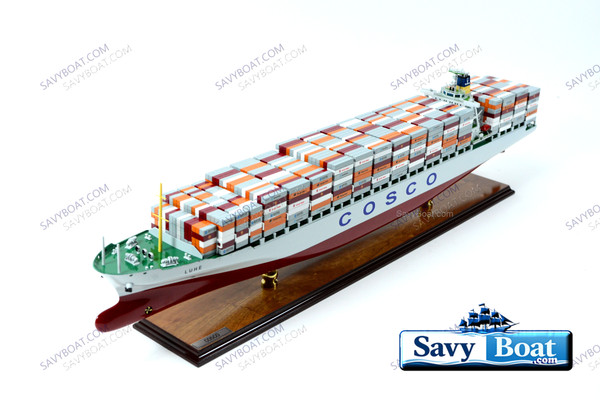

COSCO CONTAINER SHIP - EUROPE
SAVY DIRECT PRICE $899.96MSRP: $999.99COSCO CONTAINER SHIP - EUROPE FULLY BUILT AND READY TO DISPLAY MUSEUM SHIP MODEL Dimension approx.: 40L x 7W x11H (inches) The model is already built. THIS IS NOT A MODEL SHIP...
Description

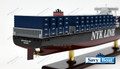
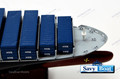
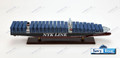
NYK LINE CONTAINER SHIP
FULLY BUILT AND READY TO DISPLAY MUSEUM, QUALITY SHIP MODEL
- Dimension approx.: 40L x 6.5W x 10H (inch)
- The model is already built. THIS IS NOT A MODEL SHIP KIT
The story of NYK Line’s container ships begins long before the first steel box was ever lifted onto a deck. Founded in 1885 through the merger of Mitsubishi Mail Steamship Company and Kyodo Unyu Kaisha, Nippon Yusen Kabushiki Kaisha built its reputation on traditional passenger and cargo liners that connected Japan with Asia, Europe, Australia, and the Americas. For nearly a century, NYK’s identity was shaped by elegant mail steamers, transpacific passenger ships, and a global liner network that mirrored Japan’s expanding presence in world trade.
Everything changed in the 1970s, when the “container revolution” swept across global shipping. Standardized containers promised faster loading, reduced cargo damage, and unprecedented efficiency — and NYK recognized that the future of maritime transport had arrived. As Japan’s post‑war economy surged, NYK adapted its long‑established routes to accommodate containerized cargo, marking a decisive shift from traditional break‑bulk operations to modern logistics.
One of the earliest symbols of this transition was the Kurobe Maru (1972), among the first Japanese container vessels. Though modest by today’s standards, she represented a turning point: the moment NYK stepped fully into the container era.
From the 1980s through the 2000s, NYK expanded aggressively, commissioning increasingly sophisticated ships to meet the demands of global trade. Vessels such as California Luna (1987), Santa Barbara (1992), NYK Constellation (2007), and NYK Helios (2013) reflected the company’s steady climb into the ranks of the world’s major carriers. These ships transported everything from electronics and machinery to food, textiles, and consumer goods — the lifeblood of Japan’s export economy.
By the 2010s, NYK had entered the age of the ultra‑large container vessel (ULCV). Today, the company operates ships exceeding 20,000 TEU, alongside a network of smaller feeder vessels that serve regional ports across Asia and beyond. These giants form the backbone of NYK’s long‑haul Asia–Europe and transpacific services, enabling the high‑volume, high‑efficiency transport that defines modern global logistics.
NYK’s container‑ship history mirrors its broader evolution: from a 19th‑century liner company to a 21st‑century logistics leader. Its early embrace of containerization in the 1970s positioned it at the forefront of a global transformation, and its current fleet — among the most advanced in the world — continues to support the flow of goods that power international commerce.
Today, NYK’s container ships stand as symbols of Japan’s maritime heritage and its enduring role in global trade: vessels that bridge continents, economies, and eras, carrying forward a legacy more than 140 years in the making.