









-


TEXACO BOGOTA OIL TANKER
SAVY DIRECT PRICE $449.96MSRP: $499.99TEXACO BOGOTA OIL TANKER FULLY BUILT AND READY TO DISPLAY MUSEUM QUALITY SHIP MODEL Dimension approx.: 31″ L x 4″ W x 8.3″ H The model is already built. THIS IS NOT A MODEL SHIP KIT -


TEXACO STOCKHOLM OIL TANKER
SAVY DIRECT PRICE $449.96MSRP: $499.99TEXACO STOCKHOLM OIL TANKER FULLY BUILT AND READY TO DISPLAY MUSEUM QUALITY SHIP MODEL Dimension approx.: 31″ L x 5″ W x 10″ H The model is already built. THIS IS NOT A MODEL SHIP KIT -
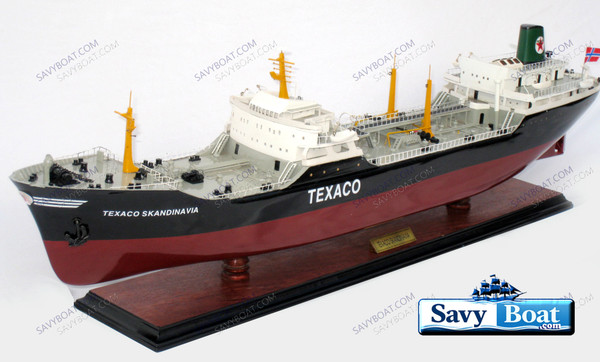
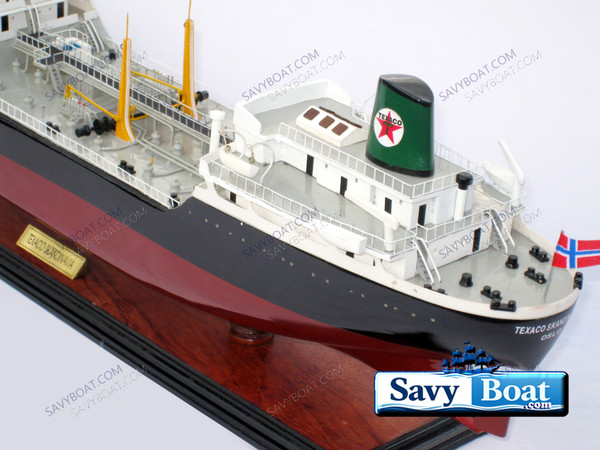
TEXACO SKANDINAVIA DIESEL TANKER
SAVY DIRECT PRICE $449.96MSRP: $499.99TEXACO SKANDINAVIA DIESEL TANKER FULLY BUILT AND READY TO DISPLAY MUSEUM QUALITY SHIP MODEL Dimension approx.: 32″ L x 5″ W x 10″ H The model is already built. THIS IS NOT A MODEL SHIP...
Description

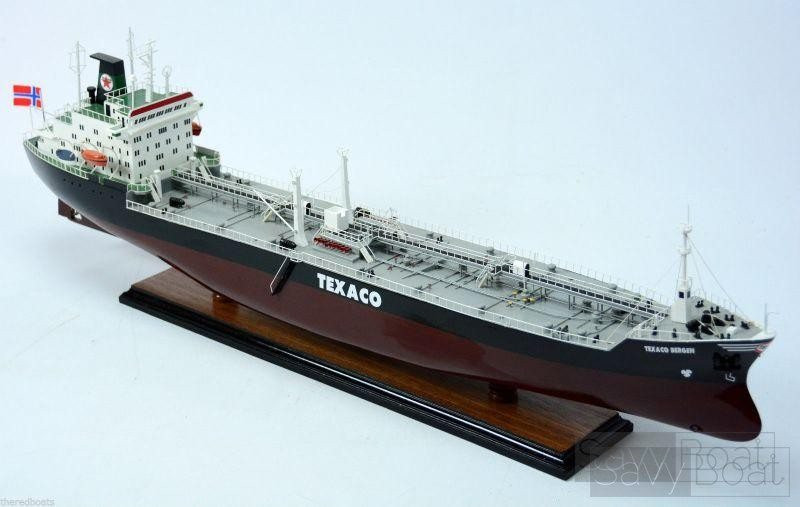
TEXACO BERGEN OIL TANKER
FULLY BUILT AND READY TO DISPLAY MUSEUM QUALITY SHIP MODEL
- Dimension approx.: 31″ L x 5″ W x 10″ H
- The model is already built. THIS IS NOT A MODEL SHIP KIT
When the Texaco Bergen slid down the ways at A/S Horten Verft in January 1977, she entered a world defined by cold seas, heavy weather, and the relentless movement of petroleum across Northern Europe. Built for Texaco Norway A/S, the tanker represented the industrial strength and engineering discipline of Norway’s shipbuilding era—solid, purposeful, and ready for decades of hard service.
Her construction began in the summer of 1976, and by April 1977 she was fully commissioned: a 168.8‑meter, 31,000‑DWT deep‑sea tanker powered by a Sulzer 6RND76 diesel engine capable of pushing her to roughly 16 knots. She carried the hallmarks of a serious commercial vessel—broad beam, deep draft, and a fuel capacity exceeding 2,200 tonnes—all designed for the demanding shuttle routes between European refineries and offshore terminals.
Throughout the late 1970s and 1980s, Texaco Bergen served as a dependable workhorse for Texaco’s Norwegian operations. Her movements were steady and predictable, part of the vast logistical network that kept crude and refined products flowing through the North Sea region. As the global oil industry evolved, so did the management of the vessel. By 1986, she had shifted to Intership A/S, followed by Barber International A/S in 1990, and later Norsk Texaco A/S and Texaco Marine Services Inc. in 1991. These transitions reflected the increasingly complex corporate structures behind large tanker fleets during that era.
In 1991, the ship underwent a symbolic transformation: she was renamed Star Bergen and re‑registered in Nassau, Bahamas, marking the beginning of a long series of ownership changes. Over the next decade, she passed through the hands of major financial institutions—Chemical Bank, Stena Tanker Management, Chase Manhattan Bank, and Northern Marine Management—each managing her as part of broader maritime investment portfolios.
Her final years saw further renamings and relocations. Sold in 1999 for USD 3.2 million, she became Giannutri under Maltese registry, then Minotaur in 2002 under Greek management. She shifted flags between Barbados and Malta, continuing to operate as a commercial tanker well into the 2000s. By then, she was a veteran of more than three decades at sea—her machinery worn, her steel fatigued, but her service record long and steady.
In December 2011, the ship reached the end of her journey. She arrived at Alang, India, one of the world’s largest ship‑breaking yards, where thousands of workers dismantle the giants of global shipping. On 30 December 2011, the cutting torches were lit, and the Texaco Bergen—once a proud Norwegian tanker—began her final transformation into reclaimed steel.
Across 34 years, the Texaco Bergen witnessed the shifting tides of the petroleum industry, the globalization of tanker management, and the financialization of commercial fleets. She served under multiple names, flags, and owners, yet her purpose remained constant: to move the lifeblood of modern industry across the world’s oceans. Her story is one of endurance, adaptation, and the quiet, essential labor of a deep‑sea tanker that did its job faithfully until the very end.