








-
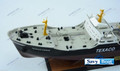
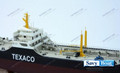
TEXACO SKANDINAVIA DIESEL TANKER
SAVY DIRECT PRICE $449.96MSRP: $499.99TEXACO SKANDINAVIA DIESEL TANKER FULLY BUILT AND READY TO DISPLAY MUSEUM QUALITY SHIP MODEL Dimension approx.: 32″ L x 5″ W x 10″ H The model is already built. THIS IS NOT A MODEL SHIP... -

TEXACO OSLO DIESEL TANKER
SAVY DIRECT PRICE $449.96MSRP: $499.99TEXACO OSLO DIESEL TANKER FULLY BUILT AND READY TO DISPLAY MUSEUM QUALITY SHIP MODEL Dimension approx.: 32″ L x 5″ W x 10″ H The model is already built. THIS IS NOT A MODEL SHIP... -


TEXACO BOGOTA OIL TANKER
SAVY DIRECT PRICE $449.96MSRP: $499.99TEXACO BOGOTA OIL TANKER FULLY BUILT AND READY TO DISPLAY MUSEUM QUALITY SHIP MODEL Dimension approx.: 31″ L x 4″ W x 8.3″ H The model is already built. THIS IS NOT A MODEL SHIP KIT
Description

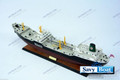
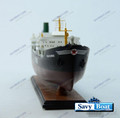
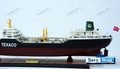
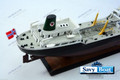
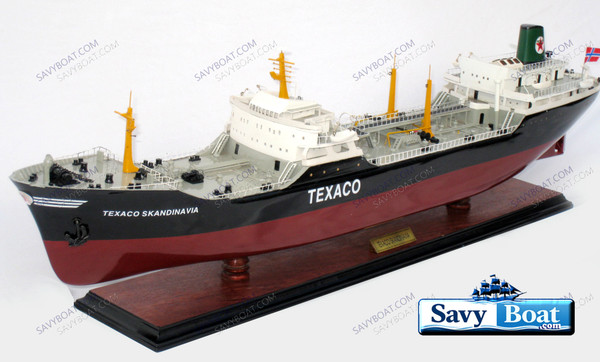
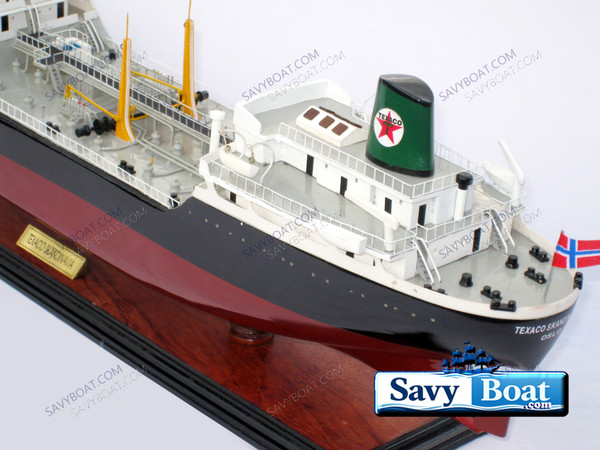
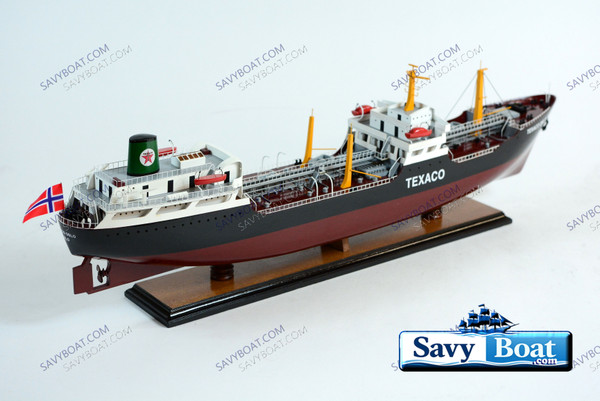
TEXACO NORGE' DIESEL TANKER
FULLY BUILT AND READY TO DISPLAY MUSEUM QUALITY SHIP MODEL
- Dimension approx.: 32″ L x 5″ W x 10″ H
- The model is already built. THIS IS NOT A MODEL SHIP KIT
When the Texaco Norway slid down the ways at Fredriksstad Mekaniske Verksted on 17 February 1962, she embodied the confident industrial momentum of Norway’s early‑1960s shipbuilding era. Built for Texaco Norway A/S, she was part of a new generation of diesel‑powered tankers designed to serve the expanding petroleum trade that connected Scandinavian refineries with ports across Europe.
Completed on 19 July 1962, the Texaco Norway was a substantial vessel for her time: 176.3 meters long, over 20,000 tons deadweight, and driven by a single Götaverken VGS7U diesel engine producing 8,750 bhp. Capable of 14.5 knots, she offered a reliable blend of power and efficiency, ideal for the steady shuttle routes of the North Sea and Baltic regions. Her cargo system — ten 300‑m³ tanks supported by pumping capacity of 3,000 m³/h — made her a practical, hardworking tanker built for continuous service.
Below decks, her auxiliary systems reflected the engineering priorities of the era: two 332‑kW diesel generators and a 220‑kW turbo generator, providing a combined 884 kW of electrical power. She was designed not just to carry oil, but to operate as a self‑sufficient industrial platform at sea.
For nearly twenty‑four years, from 1962 to 1986, the Texaco Norway served under the management of Per R. Sundby in Oslo. She became a familiar presence in Scandinavian waters, part of Texaco’s long‑established Norwegian fleet — a fleet whose origins stretched back to the 1930s and whose ships played important roles during and after World War II. The Texaco Norway carried that legacy forward, operating through decades of growth in European oil consumption and the modernization of tanker logistics.
Her first major transition came in January 1986, when she was sold to Getty Marine Corp., managed by Texaco Maritime Services in Port Arthur, Texas. She retained her name, continuing her work much as before, though now under a Bahamian registry — a reflection of the increasingly globalized ownership structures of the late 20th century.
By 1988, after more than a quarter century of service, the Texaco Norway had reached the end of her commercial life. She was sold to a hulker for USD 225 per long ton, a typical price for aging steel in the late 1980s. On 6 June 1988, she arrived in Kaohsiung, Taiwan, one of the world’s major ship‑breaking centers. Dismantling began on 15 June 1988 at Kao Feng Iron & Steel Co. Ltd., marking the final chapter of a vessel that had carried millions of barrels of petroleum across decades of European and international trade.
The Texaco Norway’s story mirrors the broader evolution of Texaco’s tanker operations during the mid‑20th century — from national fleets and regional service to multinational ownership and eventual recycling in Asia. She was a durable, diesel‑driven workhorse, built in Norway, operated across continents, and ultimately retired in Taiwan. Her long service life stands as a testament to the reliability of early‑1960s tanker design and the shifting tides of global maritime commerce.