






-
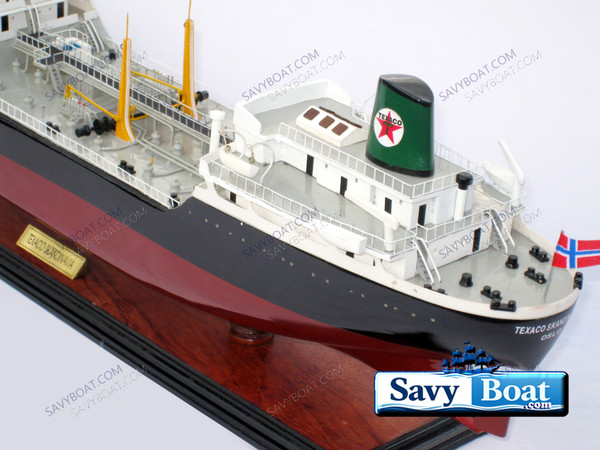
TEXACO SKANDINAVIA DIESEL TANKER
SAVY DIRECT PRICE $449.96MSRP: $499.99TEXACO SKANDINAVIA DIESEL TANKER FULLY BUILT AND READY TO DISPLAY MUSEUM QUALITY SHIP MODEL Dimension approx.: 32″ L x 5″ W x 10″ H The model is already built. THIS IS NOT A MODEL SHIP... -

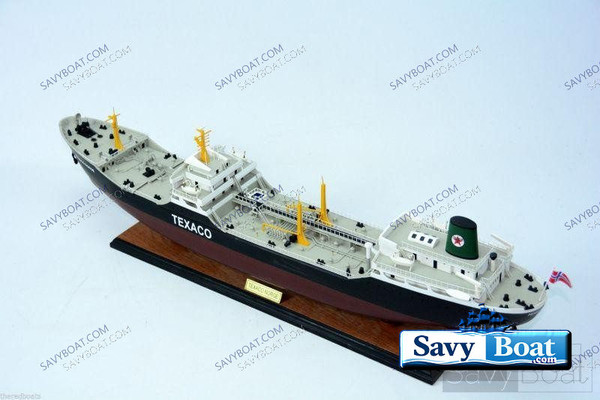
TEXACO NORGE' DIESEL TANKER
SAVY DIRECT PRICE $449.96MSRP: $499.99TEXACO NORGE' DIESEL TANKER FULLY BUILT AND READY TO DISPLAY MUSEUM QUALITY SHIP MODEL Dimension approx.: 32″ L x 5″ W x 10″ H The model is already built. THIS IS NOT A MODEL SHIP... -

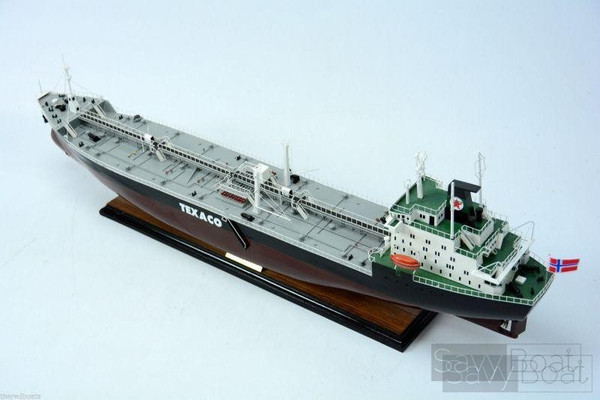
TEXACO BERGEN OIL TANKER
SAVY DIRECT PRICE $449.96MSRP: $499.99TEXACO BERGEN OIL TANKER FULLY BUILT AND READY TO DISPLAY MUSEUM QUALITY SHIP MODEL Dimension approx.: 31″ L x 5″ W x 10″ H The model is already built. THIS IS NOT A MODEL SHIP KIT When...
Description

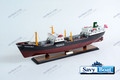
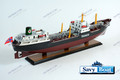
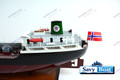
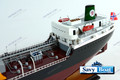
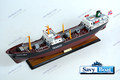
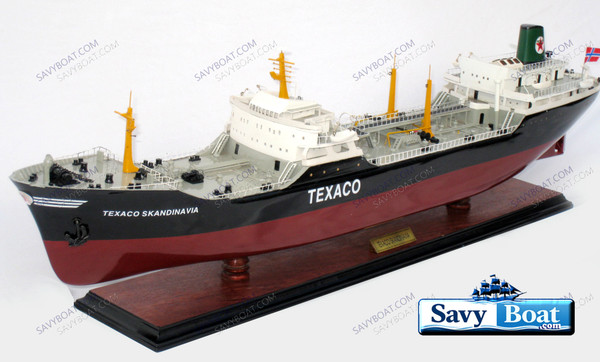
TEXACO OSLO DIESEL TANKER
FULLY BUILT AND READY TO DISPLAY MUSEUM QUALITY SHIP MODEL
- Dimension approx.: 32″ L x 5″ W x 10″ H
- The model is already built. THIS IS NOT A MODEL SHIP KIT
Texaco Oslo — A Diesel Giant of Norway’s Early Modern Tanker Fleet
When the Texaco Oslo was launched at Blythswood Shipbuilding in Scotstoun on 25 April 1960, she represented a new chapter in Texaco’s Norwegian tanker operations. Built for The Texas Company (Norway) A/S, she was part of a fleet designed to meet the growing petroleum demands of postwar Europe. Her construction reflected the industrial strength of Scottish shipyards and the long maritime tradition of Norway’s oil transport sector.
Completed on 11 August 1960, the Texaco Oslo measured 174.9 meters in length and carried 18,810 tons of deadweight. She was powered by a single Doxford 65LBD6S diesel engine, built by Rowan & Co. of Glasgow, producing 8,800 bhp and driving her at a service speed of 14.5 knots. With ten 3,000‑m³ cargo tanks, dual pump rooms, and six pumps capable of 400 m³/h, she was engineered for steady, reliable throughput — a practical workhorse built for continuous service in the North Sea and beyond.
Her early years were spent under the management of H. C. Mathiesen in Oslo, operating as Texaco Oslo. In February 1961, the company was renamed Texaco Norway A/S, and the vessel adopted the new branding. Through the 1960s and 1970s, she became a familiar sight in European petroleum routes, part of a fleet that traced its origins back to the 1930s and had played a role in Allied supply operations during World War II. The Texaco Oslo carried that legacy forward, serving as a dependable link in Texaco’s expanding global network.
A tragic incident marked her later career. On 27 November 1980, while moored at the Texaco Jetty in Canvey Island, England, a fire broke out in the midship accommodation area. Faulty electrical equipment in the pantry sparked the blaze, and despite efforts to contain it, the ship’s telegraphist lost his life. The event underscored the ever‑present risks faced by merchant mariners, even aboard well‑maintained vessels.
By the mid‑1980s, the Texaco Oslo had already logged more than two decades of service. In February 1986, she was sold to Getty Marine Corp., managed by Texaco Maritime Services in Port Arthur, Texas, and re‑registered in Nassau, Bahamas. Her operational life, however, was nearing its end. In 1987, she was sold to a breaker for USD 242 per long ton delivered, a typical valuation for aging steel at the time.
On 15 December 1987, she arrived in Kaohsiung, Taiwan, where dismantling began on 28 December at Chi Shun Hua Steel Co. Ltd. The steel that had carried millions of barrels of petroleum across decades of service was cut apart and recycled, marking the final chapter of a vessel that had served faithfully through a period of immense change in global tanker operations.
The Texaco Oslo’s story reflects the evolution of mid‑20th‑century petroleum transport — from national fleets and regional service to multinational ownership and eventual recycling in Asia. She was a durable, diesel‑driven tanker built in Scotland, operated under the Norwegian flag, and ultimately retired in Taiwan. Her long career, marked by both steady service and a notable tragedy, stands as a testament to the resilience and complexity of the tanker trade during the era.